5 Winter Plumbing Prep Tips for San Gabriel Valley Homeowners
San Gabriel Valley winters are mild — until the one night they aren’t. Every few years a cold snap drops foothill neighborhoods into the 20s, and plumbers spend the following week repairing burst hose bibs, split supply lines, and cracked backflow preventers. None of it is bad luck; it’s all preventable with an hour of prep. Here are the five things that actually matter.
Winter failures are often heater failures — our water heater team tunes up systems before the cold. Burst pipe? Our emergency plumbers answer 24/7.
1. Protect Exposed Pipes and Hose Bibs
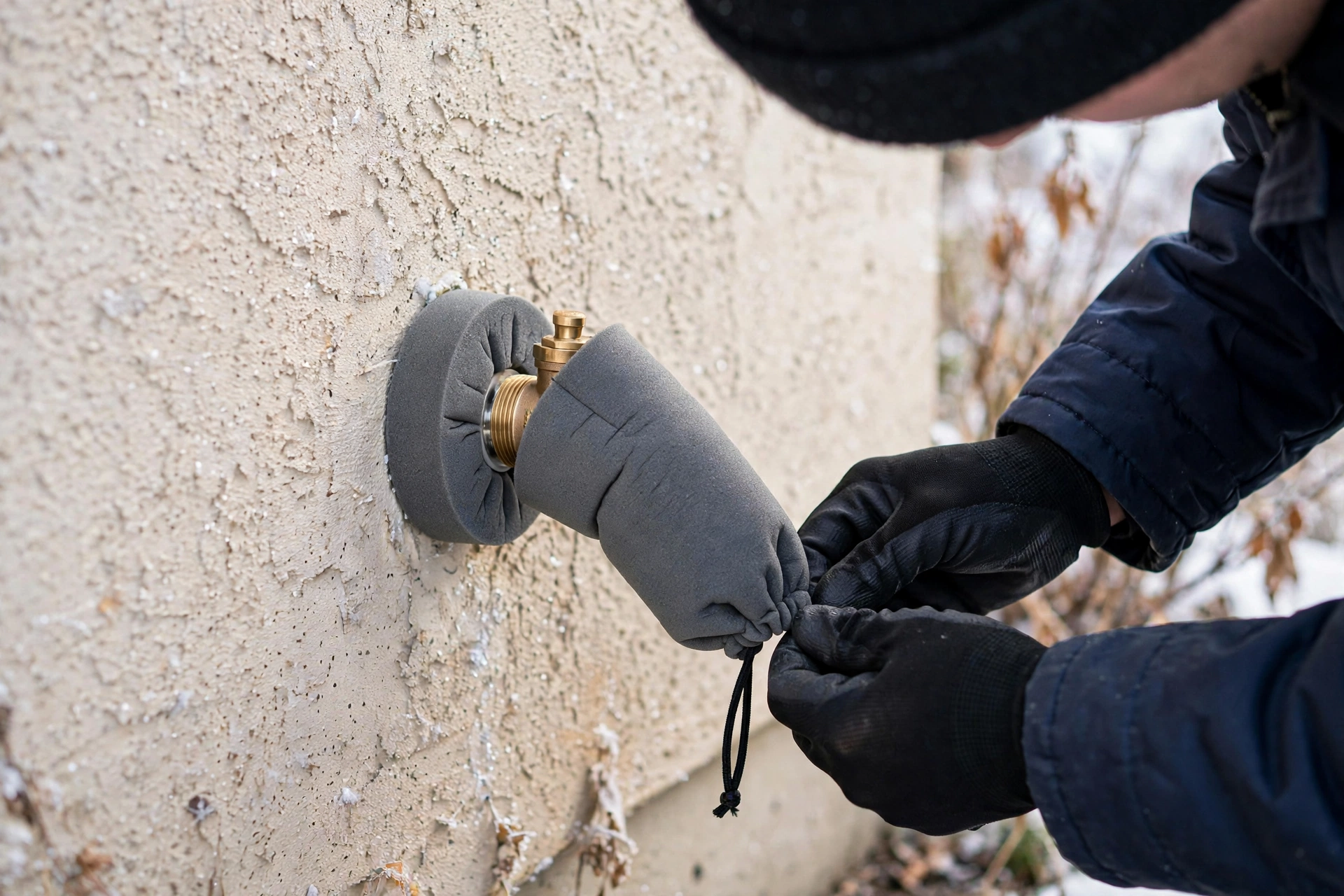
The number-one freeze casualty in the valley isn’t indoor plumbing — it’s the hose bib and the few feet of supply line feeding it through an exterior wall. Before the first cold snap:
- Disconnect all hoses. A connected hose traps water in the bib and the supply line behind it. That trapped water freezes, expands, and splits the pipe inside the wall — where you won’t see the leak until the wall is soaked. This single step prevents the majority of freeze bursts.
- Install insulated bib covers ($5–$10 each) on every exterior faucet. They’re ugly and they work.
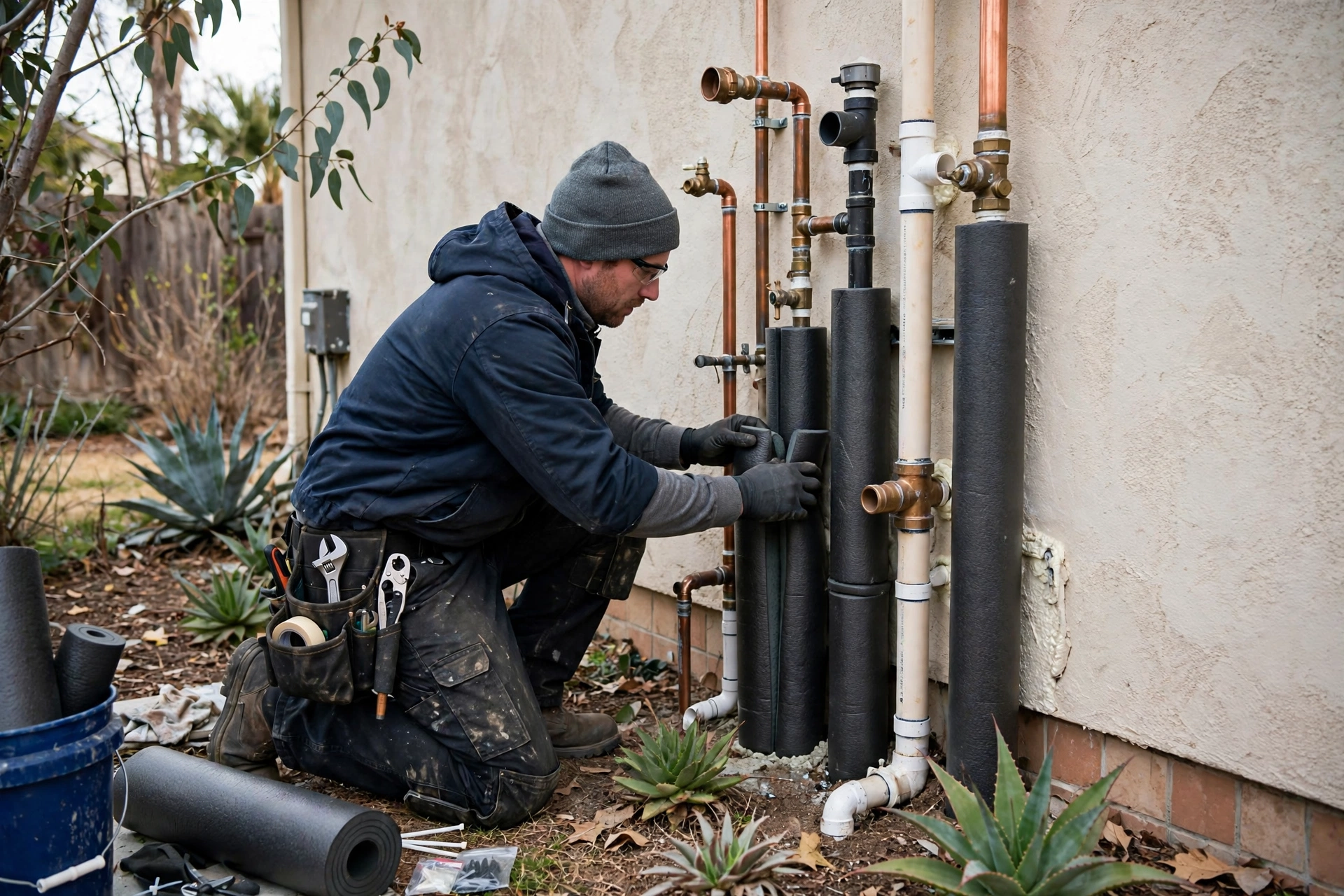
- Insulate exposed supply lines in unheated garages, crawlspaces, and along exterior walls with foam pipe sleeves. Pay special attention to pipes on north-facing walls and in Altadena/Sierra Madre foothill homes at higher elevation, where overnight lows run several degrees colder than the valley floor.
2. Know Your Main Shutoff — Before You Need It
When a pipe bursts at 6 a.m., the difference between a mop-up and a flood restoration is how fast you stop the water. Right now, today: locate your main water shutoff (usually at the meter box near the street or where the service enters the house), verify the valve actually turns — old gate valves seize — and make sure every adult in the house knows where it is. If the valve is seized or the meter box is buried, have a plumber replace the main shutoff with a full-port ball valve ($300–$600 installed). It’s the cheapest flood insurance you can buy. While you’re at it, label the water heater shutoff and the individual fixture stops under sinks and behind toilets.
3. Service the Water Heater and Check the PRV
Winter is when water heaters work hardest — incoming water is 10–15 degrees colder, so recovery cycles run longer. Before the season:
- Flush sediment (see our noisy water heater guide) — a sedimented tank in winter is a tank straining at its limit.
- Check the anode rod if it’s been 3+ years. Winter is a bad time for a tank failure.
- Test house pressure at a hose bib. Thermal expansion hits harder in winter as the heater cycles more; if your PRV is failing and pressure is creeping past 80 PSI, the expansion tank and relief valve are your only safety nets. Verify the T&P relief valve on the heater actually operates (lift the test lever briefly — water should flow, then stop).
- Insulate the first few feet of hot-water pipe leaving the tank — it cuts standby loss measurably during the months the heater works hardest.
4. Winterize Irrigation and Drainage
Sprinkler systems and drip lines are freeze-prone and often forgotten:
- Shut off and drain the irrigation system if a hard freeze is forecast — or at minimum insulate the above-ground backflow preventer, which is the most expensive single irrigation component to replace ($300–$700 installed).
- Clear gutters and area drains before winter rains. The valley’s winter rain comes in bursts, and clogged drains turn a hillside lot’s runoff into foundation and crawlspace problems. Foothill homes with slope drainage should verify their drains flow freely before the first big storm.
- Check sump pumps if you have one (rare in the valley, but they exist in low-lying or hillside-daylighted basements) — pour a bucket of water in the pit and confirm it pumps.
5. Handle the Vacation and Cold-Snap Protocol
Leaving town over the holidays? Two schools of thought: shut the water off at the main and drain the lines (maximum protection, minor inconvenience on return), or leave the heat set to at least 55°F and have someone check the house (less disruption). For a valley winter, the practical middle path: shut off the water at the main, open the lowest faucet to relieve pressure, keep the heater on its vacation setting, and disconnect the hoses. If a cold snap is forecast while you’re away, that’s the week to have a neighbor check in.
During an actual freeze warning: open cabinet doors under sinks on exterior walls to let warm air reach the pipes, let faucets drip slightly on the most vulnerable runs (moving water resists freezing), and know that the danger window is typically 2–6 a.m. — check exposed areas in the morning, not just at night.
What to Do Monday Morning: Your Action Steps
- Disconnect every hose and cover every bib. Ten minutes, under $20 in covers. Do it before the forecast, not during.
- Test your main shutoff today. If it won’t turn, schedule the ball-valve replacement — don’t discover a seized valve during a burst.
- Insulate the vulnerable runs. Foam sleeves on exposed pipes in the garage, crawlspace, and north walls; insulated cover on the irrigation backflow preventer.
- Flush the water heater and test the T&P valve. Winter is peak load season — go into it with a clean tank and a working safety valve.
- Clear the drains before the rains. Gutters, area drains, and slope drainage all get verified before the first big storm, not after the water finds the weak point.
Winter plumbing prep is an hour of work that prevents the most common cold-weather service calls in the valley. If you’d rather have a pro handle the seasonal checkup — shutoff test, heater flush, PRV check, and insulation review in one visit — Plumbers in Altadena connects San Gabriel Valley homeowners with licensed C-36 contractors across Sierra Madre, Arcadia, Pasadena, and every foothill city. Call (888) 555-0199.
Do pipes really freeze in the San Gabriel Valley?
Yes — not often, but regularly enough to matter. Foothill areas like Altadena and Sierra Madre see overnight lows in the 20s during periodic cold snaps, and exposed hose bibs, irrigation backflow preventers, and uninsulated supply lines in garages and crawlspaces freeze and burst. Every cold snap generates a wave of these calls.
Should I drip my faucets during a freeze warning?
For your most vulnerable runs (exterior-wall plumbing, unheated areas), yes — a slight drip keeps water moving and relieves pressure buildup. It’s a supplement to insulation and hose disconnection, not a substitute.
What temperature should I keep the house at if I leave for winter holidays?
At least 55°F if you’re leaving the water on. Better: shut the water off at the main, relieve pressure at the lowest faucet, set the water heater to vacation mode, and disconnect all hoses. That’s maximum protection with minimal hassle.
How do I protect my sprinkler system from freezing?
Shut off the irrigation supply and drain the lines if a hard freeze is forecast. At minimum, insulate the above-ground backflow preventer — it’s the costliest component to replace ($300–$700 installed) and the most exposed.
What should I do if a pipe bursts?
Shut off the main water valve immediately — this is why knowing its location in advance matters. Then open faucets to drain remaining pressure, shut off the water heater if the burst is on the hot side, and call a plumber. Document damage with photos for insurance.
Need a Plumber Right Now?
Don’t wait for a small leak to become a big bill. Our licensed local plumbers answer 24/7 — nights, weekends, and holidays.
(888) 555-0199
Average emergency response under 60 minutes across the San Gabriel Valley