Slab Leaks in Older California Homes: Detection, Repair, and Insurance
A warm spot on the tile floor. A water bill that doubled for no reason. The faint sound of running water when every tap is off. In older California homes — especially 1950s–70s ranch houses built on concrete slabs with copper lines run underneath — these are the calling cards of a slab leak: a pressurized water line failing beneath your foundation. Left alone, a slab leak wastes thousands of gallons, erodes soil under the slab, and invites mold. Caught early, it’s a manageable repair.
Suspect a slab leak? Our electronic leak detection confirms it without demolition — and if the whole system is aging, repiping may be the answer.
Why Slab Leaks Hit Older California Homes So Hard
Postwar building booms poured millions of slab-on-grade homes across Southern California, with soft copper water lines buried directly in or under the concrete. Three things conspire against those lines over 50+ years: the valley’s hard water pitting copper from the inside, soil chemistry and stray electrical currents corroding it from the outside, and the slab itself — concrete is alkaline, and copper in direct contact with it corrodes at every point of contact unless it was properly sleeved. Add minor seismic movement over the decades, and pinholes develop. Many foothill homes are now squarely in the failure window.
How to Tell If You Have a Slab Leak
No single symptom is conclusive, but the pattern is:
- Unexplained water bill spike — the most common first clue. Compare against the same month last year, not last month.
- Sound of running water with all fixtures off. Put your ear to a wall or floor in a quiet house.
- Warm or damp spots on floors — a hot-line leak heats the slab above it.
- Low water pressure throughout the house.
- Water meter test: turn off every fixture and ice maker, then watch the meter. If the dial or leak indicator moves, water is going somewhere it shouldn’t.
- Mildew smell, damp baseboards, or flooring that buckles near interior walls.
The meter test is the homeowner’s best first diagnostic and costs nothing. If the meter moves, call a plumber — don’t wait to “see if it gets worse.” It will.
How Pros Find the Exact Leak (Leak Detection)
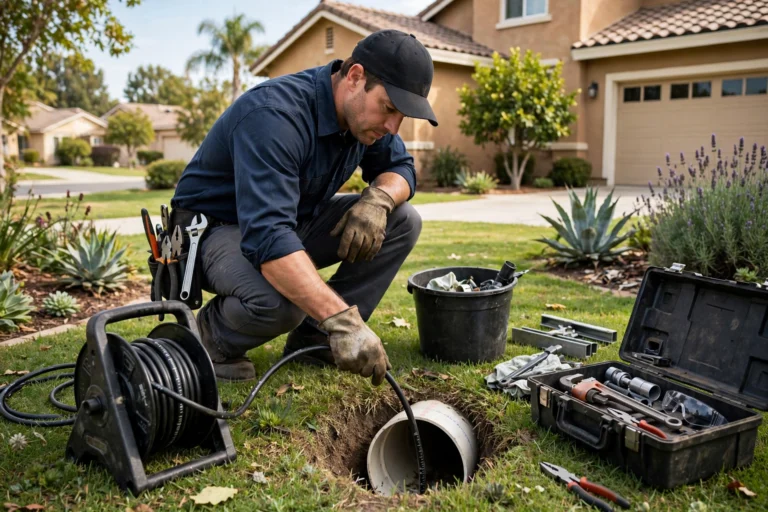
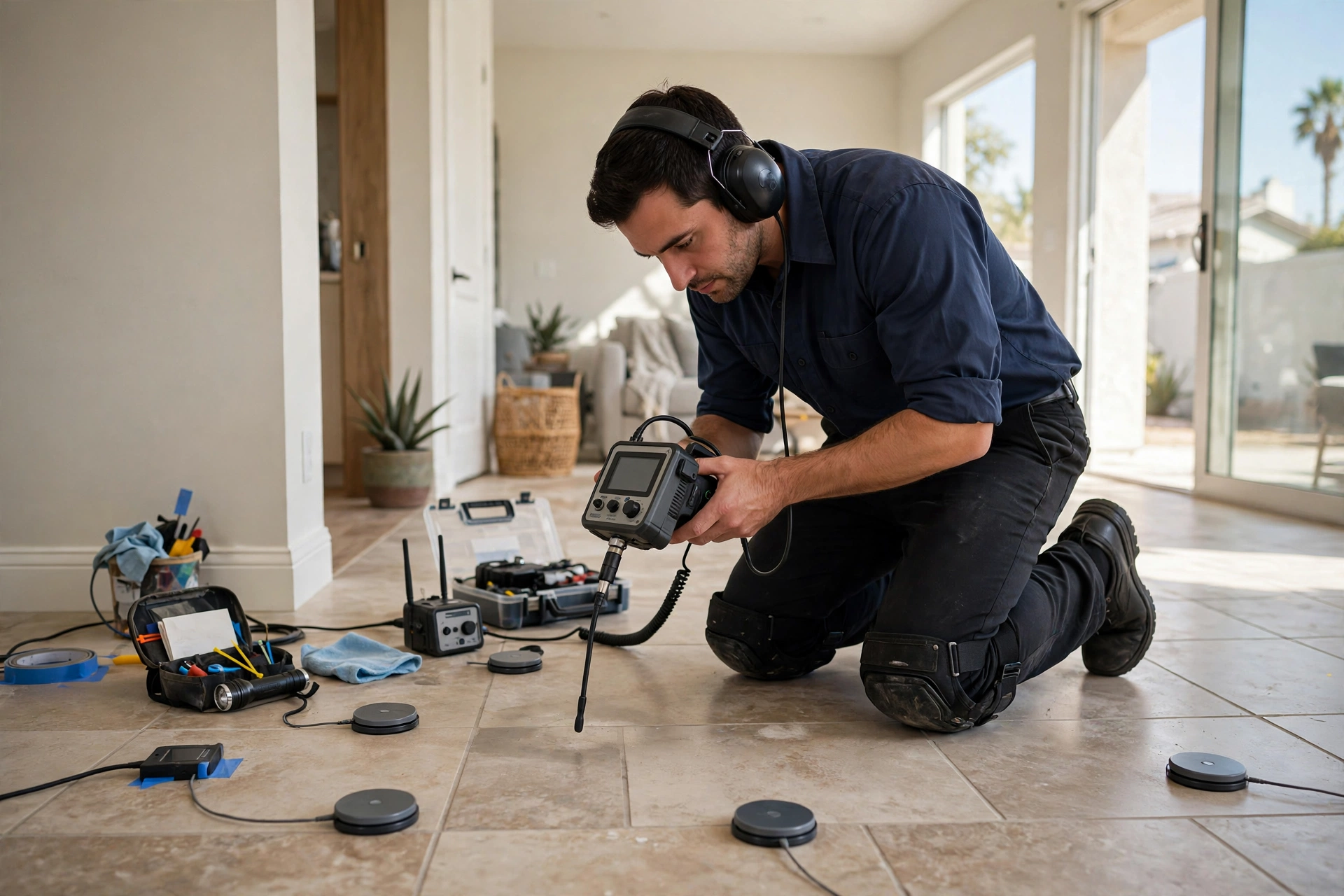
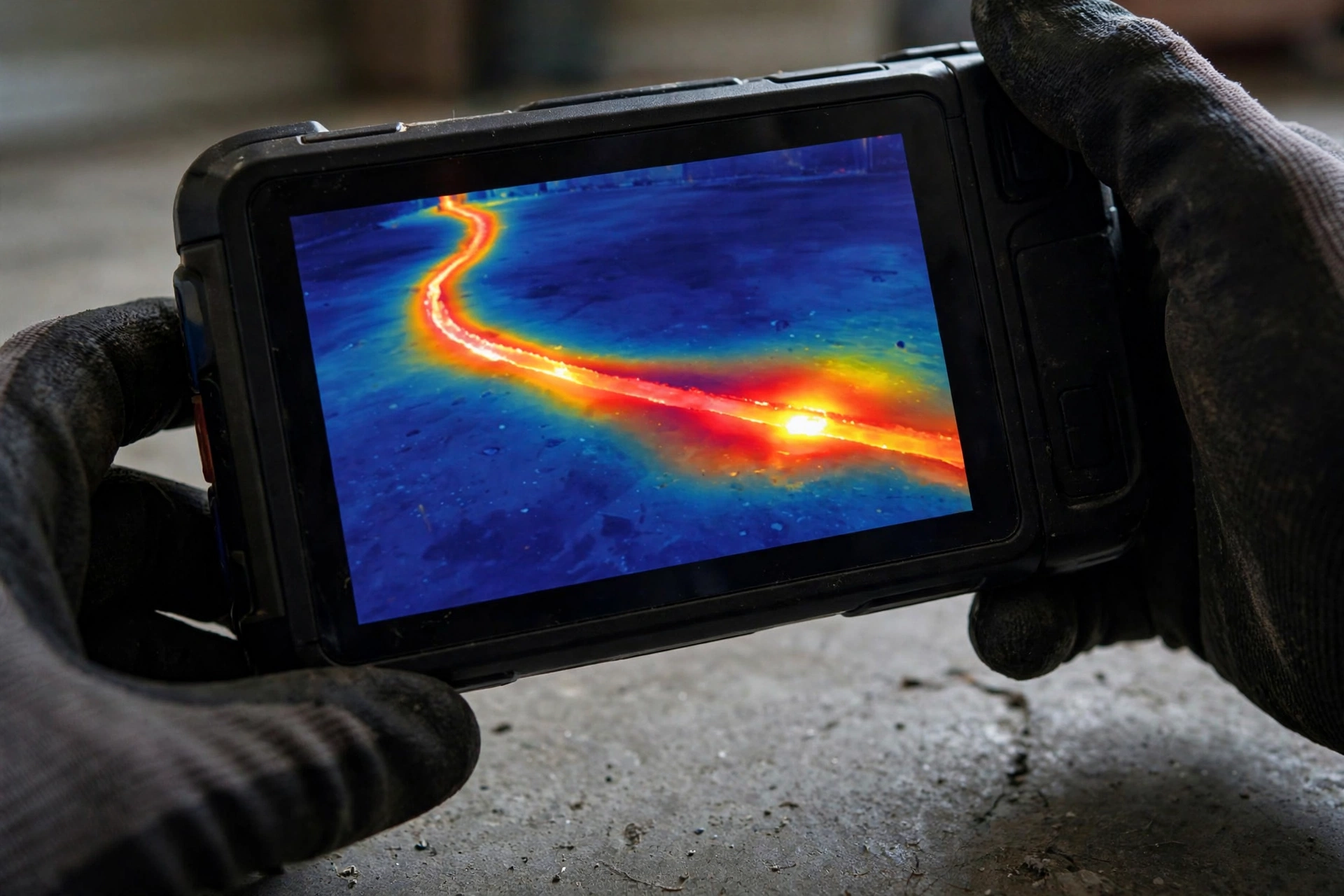
Modern leak detection is non-destructive and precise. A specialist uses acoustic listening equipment to hear the leak’s hiss through the slab, electronic line locators to map the pipe’s path, thermal imaging to spot the warm plume from a hot-line leak, and pressure testing to isolate which line is failing. A good tech pinpoints the leak within inches — which matters enormously, because the repair options range from opening one small square of slab to rerouting the whole line. Expect to pay $300–$600 for professional detection; it’s the cheapest money in the whole process because it prevents exploratory demolition.
Repair Options: From Spot Fix to Reroute
- Spot repair (open the slab): Jackhammer a section, repair the pipe, repour. Cheapest upfront ($1,500–$4,000) but disruptive — dust, noise, flooring repair — and it fixes one leak in a system that’s aging everywhere. If the line is 50 years old, the next pinhole may be a foot away.
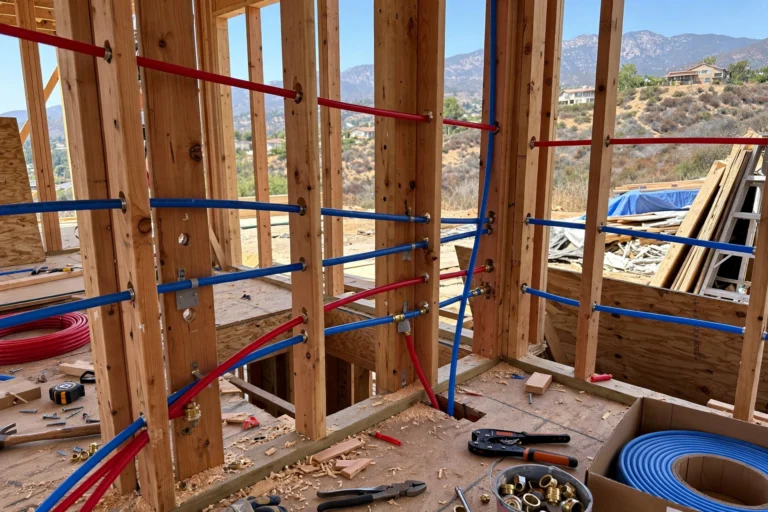
- Reroute (abandon in place): Leave the old under-slab line alone and run a new PEX or copper line overhead through walls or attic. Often the smartest choice for older homes: $2,500–$6,000, minimal demolition, and the new line is accessible forever after. This is what most experienced plumbers recommend when the system is broadly aged.
- Epoxy pipe lining: Coating the inside of the existing line. It has a place for inaccessible runs, but it’s not a structural repair and results vary — get it from a specialist with a real warranty, not as an upsell.
If slab leaks keep recurring in different spots, that’s a system-level verdict: the under-slab copper is done, and a partial or whole-house repipe with overhead routing is the durable answer.
Will Insurance Cover a Slab Leak? The Verified Facts
Here’s what actually happens with slab leak claims, confirmed against how carriers handle them: the pipe repair itself is usually NOT covered when the cause is wear and tear, corrosion, or age — which is the cause in the vast majority of slab leaks in older homes. What often IS covered is the resulting sudden water damage: ruined flooring, damaged drywall, and mold remediation from a leak that manifested abruptly.
The trap is the slow leak. Carriers routinely deny claims for damage from leaks that seeped over weeks or months under the “long-term seepage” exclusion — unless you carry a specific water-damage endorsement. And “I didn’t know” is not a defense if the water bills show a spike you ignored for three billing cycles.
If you discover a leak, document like a claims adjuster is watching, because one might be:
- Dated photos and video of every symptom — warm spots (thermal camera shots if you have them), damp areas, meter readings.
- The plumber’s written detection report with the leak location, method used, and date. Verbal diagnoses don’t survive claims review.
- Water bills showing the spike versus the same period last year.
- A mitigation log — when you shut the water off, when you called, what you did. Prompt action strengthens the “sudden” framing.
And if you’re buying an older slab home, ask your agent about water-damage and service-line endorsements before you need them — they’re cheap compared to a denied claim.
What to Do Monday Morning: Your Action Steps
- Do the meter test today. Shut everything off, watch the meter for 20 minutes. Moving dial = call a plumber this week, not next month.
- Pull last year’s water bills. A gradual climb you never noticed is the signature of a slow slab leak — and the evidence you’ll need either way.
- Book electronic leak detection, not a guess. $300–$600 for acoustic/thermal pinpointing beats exploratory jackhammering every time.
- Photograph everything before the repair. Dated photos plus the plumber’s written report are what stand between you and a denied insurance claim.
Suspect a slab leak? Don’t run the meter test and then sit on the result. Plumbers in Altadena connects San Gabriel Valley homeowners with licensed C-36 contractors who do electronic leak detection daily — including Monrovia and Duarte neighborhoods full of mid-century slab homes. Call (888) 555-0199; the detection appointment is the step that saves you from guessing.
How do I know if I have a slab leak or just a regular leak?
Do the water meter test: shut off everything, including ice makers, and watch the meter for 15–30 minutes. If it moves, you have a leak somewhere in the pressurized system. Warm spots on floors, the sound of running water with taps off, and damp baseboards point specifically to an under-slab leak.
How much does slab leak detection cost?
Professional electronic leak detection runs $300–$600 in the San Gabriel Valley. It pinpoints the leak within inches using acoustic and thermal equipment, which prevents costly exploratory demolition.
Is it better to repair a slab leak or reroute the line?
For a single leak in an otherwise sound system, spot repair is fine. For older homes where the under-slab copper is broadly aged, rerouting overhead in PEX or copper is usually the smarter long-term fix — less demolition and the new line stays accessible.
Does homeowners insurance cover slab leak repair?
Usually only partially. The pipe repair itself is typically NOT covered when the cause is wear and tear or corrosion. Resulting sudden water damage — flooring, drywall, mold remediation — often is covered. But slow leaks that seeped for weeks are routinely denied under the long-term seepage exclusion unless you carry a water-damage endorsement. Document with dated photos and the plumber’s written report the day you discover it.
Can a slab leak cause foundation damage?
Yes, over time. A pressurized leak erodes soil beneath the slab, which can cause settling and cracking. It can also wick moisture up into flooring and walls, feeding mold. Early detection is the difference between a plumbing repair and a foundation problem.
Need a Plumber Right Now?
Don’t wait for a small leak to become a big bill. Our licensed local plumbers answer 24/7 — nights, weekends, and holidays.
(888) 555-0199
Average emergency response under 60 minutes across the San Gabriel Valley