Why San Gabriel Valley Has Some of California’s Hardest Water (and What It Does to Your Pipes)
If you’ve ever noticed crusty white buildup around your faucets, spots on dishes no matter how many times you rinse, or a water heater that gave up years early, you’re seeing San Gabriel Valley hard water at work. Homeowners from Altadena to Sierra Madre deal with some of the hardest municipal water in California — typically testing at 10 to 20 grains per gallon, well into the “very hard” range. That mineral load doesn’t just stain your glassware. Over years it silently attacks your plumbing from the inside out.
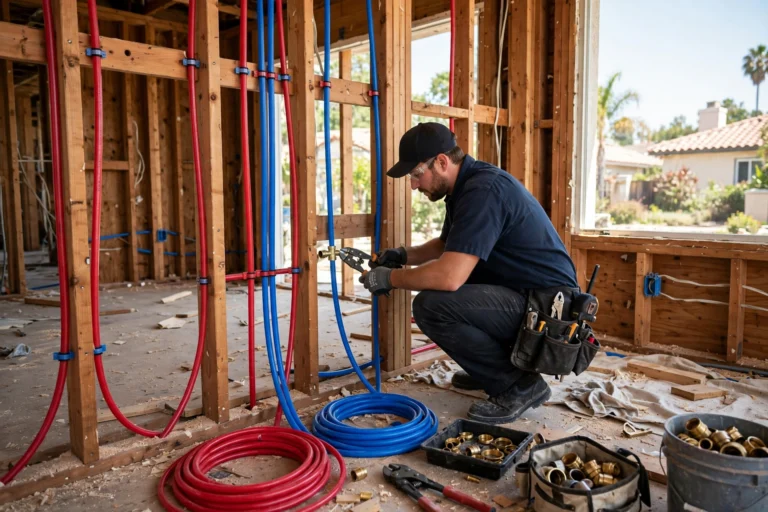
Hard water quietly destroys pipes from the inside — if yours are already failing, see our whole-house repipe guide and water heater services for hard-water-damaged units.
Why the Water Here Is So Hard
The San Gabriel Valley’s water hardness comes straight from its geology. Much of the valley’s groundwater comes from aquifers fed by runoff from the San Gabriel Mountains — water that has spent decades percolating through limestone, dolomite, and mineral-rich sediment. That journey dissolves calcium and magnesium into the supply. As the region blends imported State Water Project water with local groundwater, the exact hardness varies by city and even by season, but foothill communities sitting closest to the aquifer recharge zones — Altadena, Sierra Madre, Arcadia, La Cañada Flintridge — consistently test at the high end.
Pre-1960 homes in these neighborhoods carry an extra disadvantage: many still run on original galvanized steel supply lines, which corrode faster when hard water deposits scale on their already-narrowed interiors. Hard water isn’t the whole story behind aging pipe failures, but it’s an accelerant. For a deeper look at aging pipe materials, see our guide on whole-house repipe options.
What Scale Buildup Does to Your Pipes
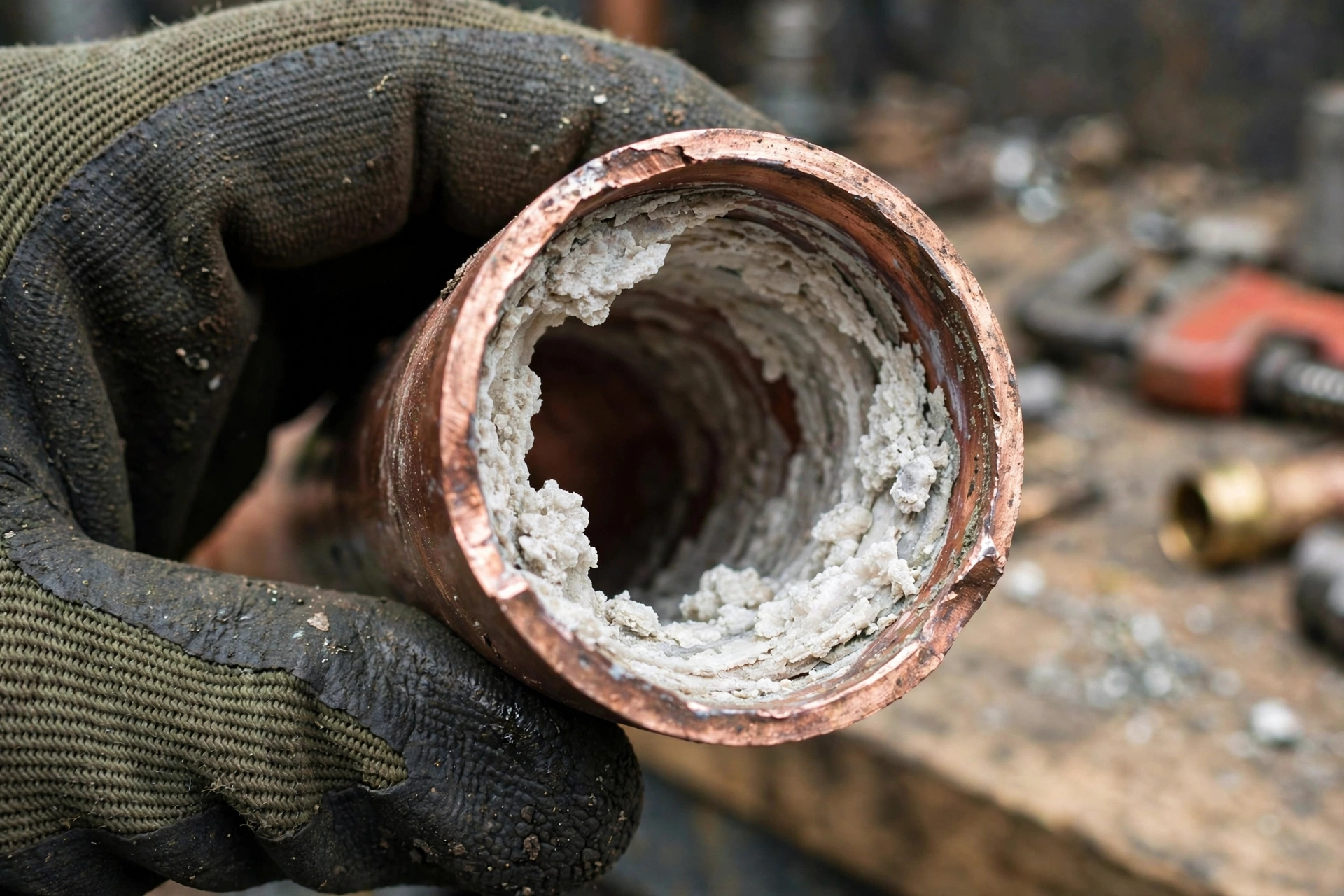
Inside your pipes, hardness minerals precipitate out as scale — a rock-hard crust that clings to interior walls. On copper, scale roughens the surface and creates tiny galvanic cells that speed up pinhole leaks. In galvanized steel, scale traps moisture against corroding metal and narrows the bore until water pressure drops to a trickle. We’ve opened 60-year-old galvanized lines in South Pasadena where the usable opening was no wider than a pencil.
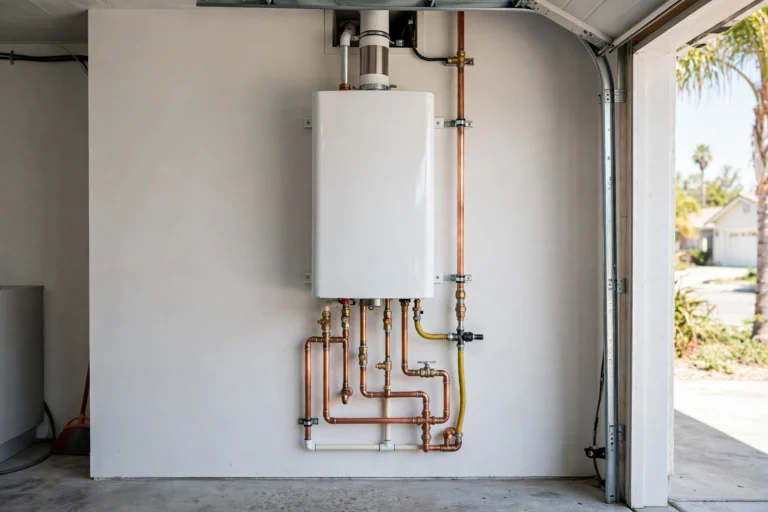
Scale does its worst damage in your water heater. Every tank water heater in the valley is slowly filling with sediment: mineral deposits that settle on the bottom, insulate the burner or elements from the water, and force longer heating cycles. A tank that’s never been flushed in a 15-grain-per-gallon area can lose a quarter of its capacity to sediment in under a decade — and the overheated bottom metal is exactly what causes tank failures and rumbling noises. If yours has started grumbling, read why your water heater is making noise.
How to Test Your Water Hardness
You don’t need a lab. Hardware-store test strips will confirm whether you’re dealing with hard water, and most local water agencies publish annual water-quality reports with exact grain-per-gallon figures for your pressure zone. A plumber can also do a simple in-home test in minutes. The number matters because it sizes the solution: a whole-house softener that works fine at 8 grains can be overwhelmed at 18.
Also check your pressure-reducing valve (PRV). Hard water scale can foul a PRV’s diaphragm, letting street pressure creep upward and strain every fixture, supply line, and valve in the house. If your pressure tests above 80 PSI, the PRV needs service or replacement regardless of water softness.
Real Fixes, Not Just Rinsing Aids
Vinegar soaks and spot-free rinse agents treat symptoms. The permanent fixes address the minerals before they reach your plumbing:
- Whole-house water softener (ion exchange): The proven solution for 10+ grains per gallon. Sized to your home’s grain load and peak flow rate, not a one-size-fits-all box from a big-box store.
- Salt-free conditioners: These reduce scale adhesion but don’t remove minerals. Fine as a supplement in moderately hard areas; don’t expect softener results.
- Reverse osmosis at the sink: Great for drinking water and protecting a single faucet or ice maker — not a whole-plumbing solution.
- Annual water heater flush and anode rod check: The single cheapest insurance against sediment damage. In the valley, yearly is not overkill.
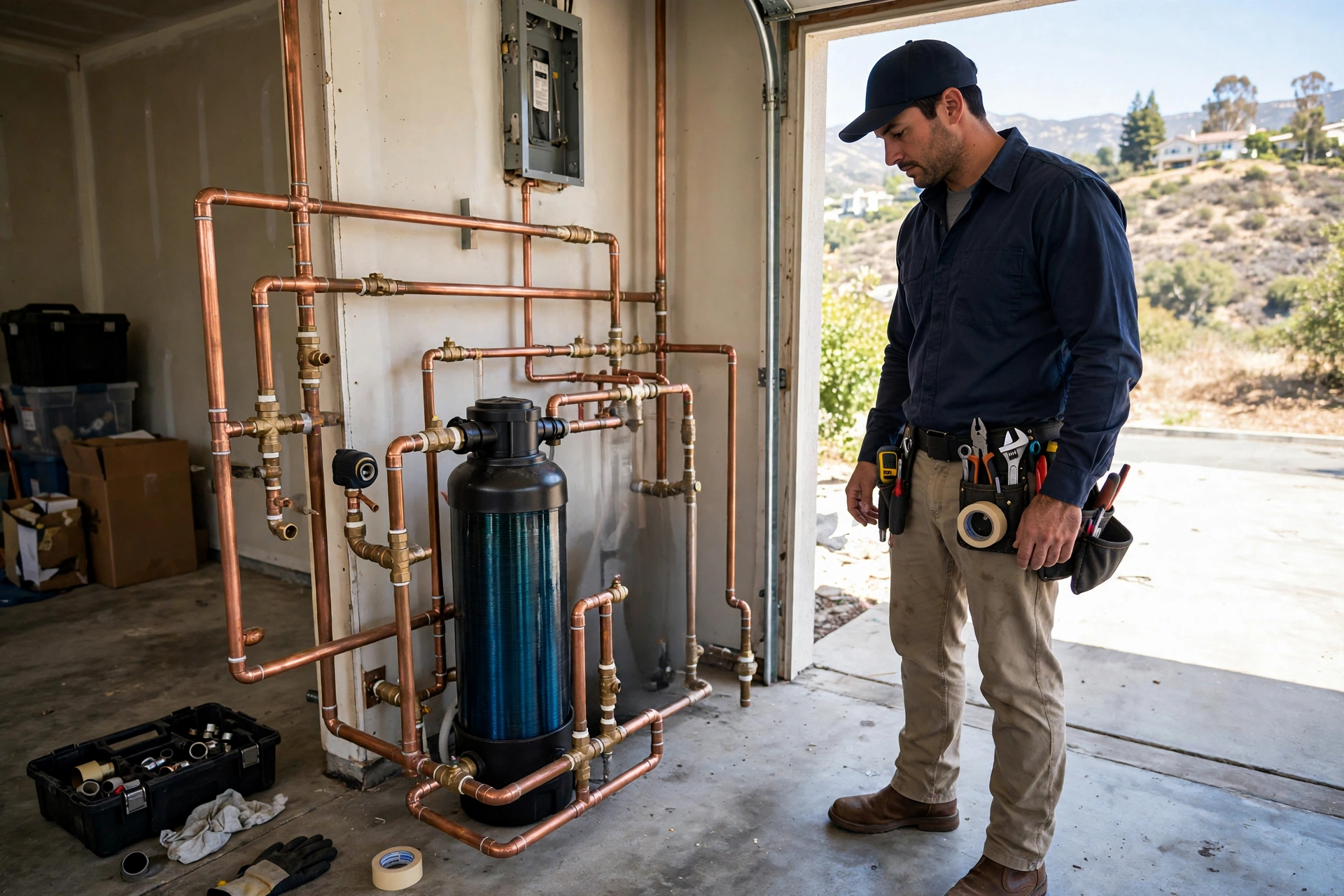
A softener also has to be installed correctly — proper drain connection, correct bypass loop, and a drain that can handle regeneration discharge per local code. A licensed C-36 plumbing contractor will size and permit it; Plumbers in Altadena connects homeowners across the San Gabriel Valley with vetted local plumbers who handle exactly this work. If you’re in the foothills, start with our Altadena plumber page or browse our Pasadena plumbing services.
What to Do This Week: Your Action Steps
- Test your water. Grab hardness test strips or check your water agency’s annual quality report for your pressure zone’s grains per gallon. Above 10 gpg, you have a scale problem whether you see it yet or not.
- Flush your water heater and check the anode rod. If it’s been more than a year — or never — schedule it. This is the highest-ROI plumbing maintenance in the valley.
- Check your PRV. A $15 pressure gauge on a hose bib tells you if street pressure is creeping past 80 PSI and stressing every fixture in the house.
- Get a softener sized, not guessed. If hardness is high, have a licensed plumber size a unit to your home’s actual grain load and flow rate — then protect the investment you’re making in your pipes.
Protect Your Plumbing Before Scale Wins
Hard water damage is cumulative and silent. By the time you see symptoms — low pressure, white crust on fixtures, a failing heater — the scale has been building for years. Test your water, flush your heater, and talk to a local plumber about softening if your grains per gallon are in the valley’s typical 10–20 range. For any persistent issue, reach our team at (888) 555-0199 and we’ll match you with a licensed contractor in your neighborhood.
What is considered “hard” water in grains per gallon?
Under 3.5 gpg is soft, 3.5–7 is moderately hard, 7–10.5 is hard, and anything above 10.5 is very hard. Much of the San Gabriel Valley tests at 10–20 gpg, placing it firmly in the very-hard range.
Does hard water actually damage pipes, or just leave spots?
It does both. Scale buildup narrows pipe interiors, reduces water pressure, accelerates corrosion in galvanized steel and copper, and destroys water heaters by insulating the tank from the heat source. Spots are the cosmetic warning sign of a mechanical problem.
Will a water softener fix my low water pressure?
It prevents future scale from forming, but it can’t dissolve years of existing buildup. If pressure is already low from scaled or corroded pipes, you may need descaling, pipe replacement, or a repipe — a softener keeps the new work protected.
How often should I flush my water heater in the San Gabriel Valley?
Once a year, minimum. In the hardest parts of the valley, some plumbers recommend twice a year for older tank heaters. Flushing removes settled sediment before it bakes onto the tank bottom.
Are salt-free water conditioners enough for valley water?
Usually not at 10+ grains per gallon. Conditioners reduce scale sticking but leave the minerals in the water. For truly hard valley water, ion-exchange softening is the reliable whole-house fix.
Need a Plumber Right Now?
Don’t wait for a small leak to become a big bill. Our licensed local plumbers answer 24/7 — nights, weekends, and holidays.
(888) 555-0199
Average emergency response under 60 minutes across the San Gabriel Valley