Plumbing Rough-In for a Rebuild: What Altadena Homeowners Should Know
Rebuilding a home is a long road — part logistics, part patience, part paperwork. If you’re restoring a property in Altadena, the plumbing rough-in is one of the earliest and most consequential phases: every drain, vent, water line, and gas line gets installed before walls close up, and mistakes at this stage are the most expensive kind to fix later. This guide covers what the rough-in involves, the permits and inspections LA County requires, and the decisions worth getting right the first time.
Rebuild plumbing starts with the pipes in your walls — our repipe specialists handle full replacements. New kitchens and baths need professional fixture installation too.
What “Rough-In” Actually Means
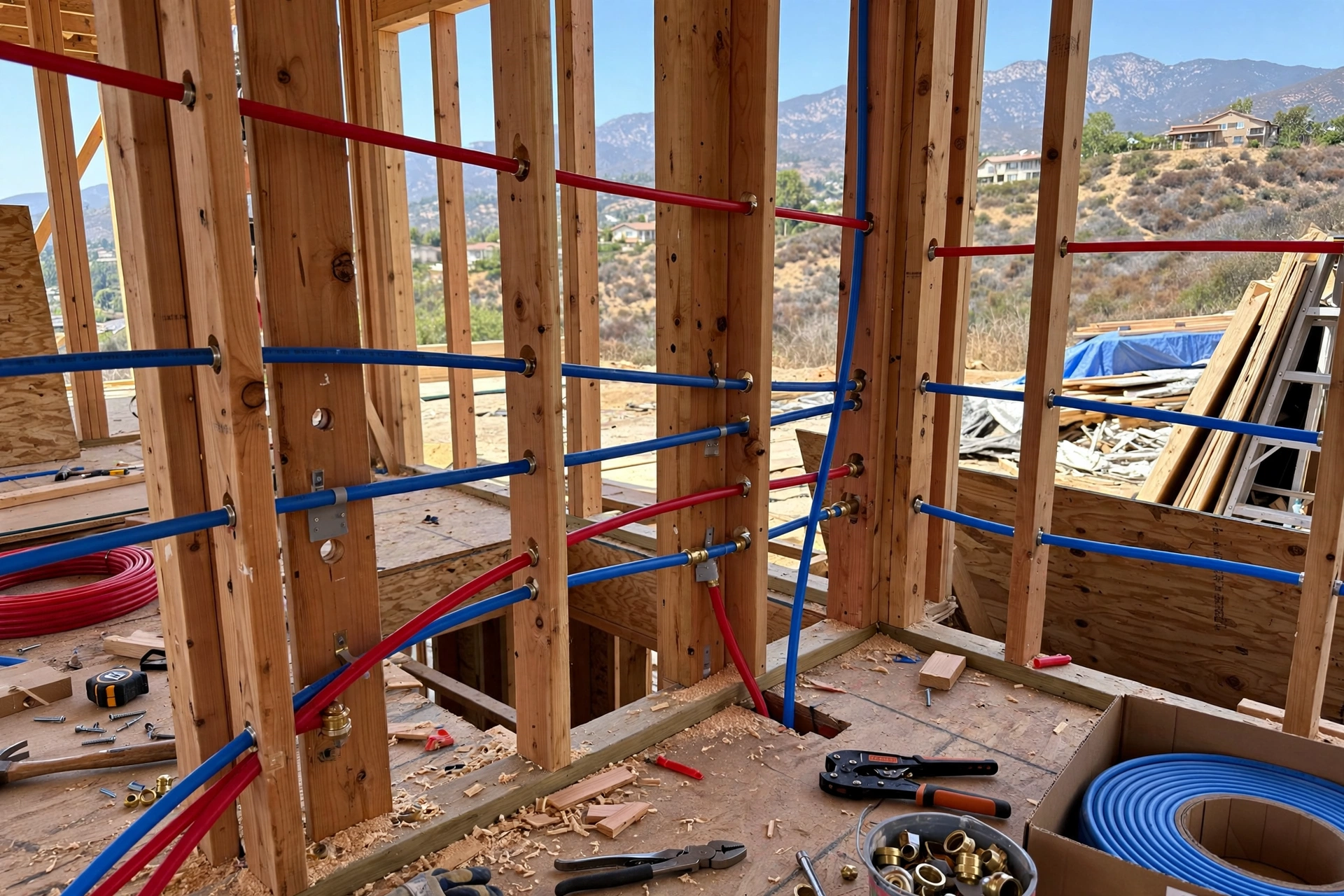
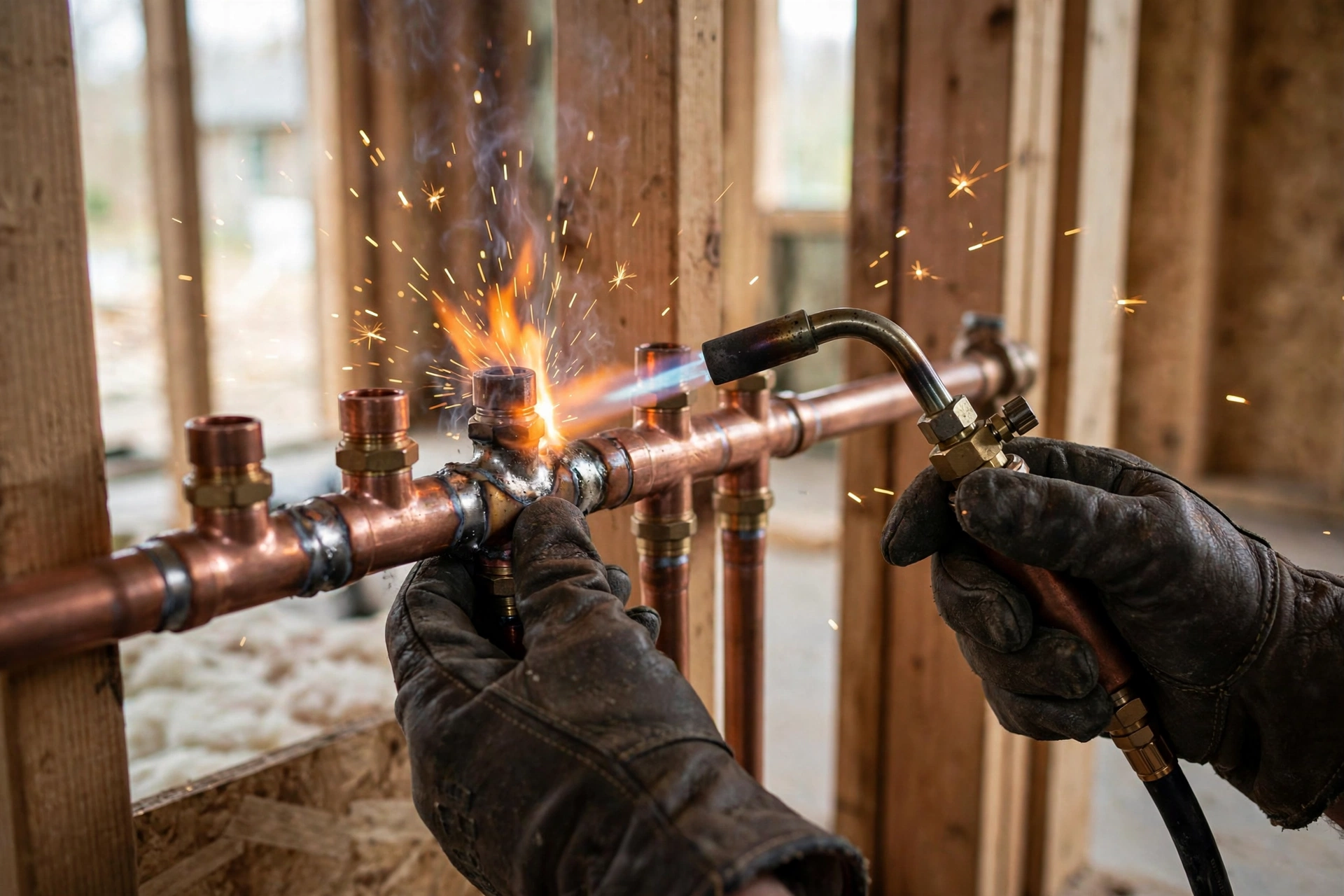
The rough-in is the installation of all concealed plumbing — everything that lives inside walls, floors, and ceilings before finishes go on:
- Drain, waste, and vent (DWV) piping — the gravity-fed drain lines and the vent stacks that keep them flowing and trap seals intact.
- Water supply lines — hot and cold distribution, usually PEX or copper in new construction.
- Gas lines — properly sized for every appliance, pressure-tested before concealment.
- Fixture stub-outs — capped pipe ends positioned exactly where each toilet, sink, shower, and appliance will connect.
After rough-in comes the rough inspection — the building department verifies everything before drywall. Then insulation and drywall close the walls, and the “trim-out” phase sets the actual fixtures much later. The rough-in typically happens right after framing and before or alongside electrical and HVAC rough work, so coordination between trades matters.
Permits and Inspections in LA County: The Practical Sequence
Rebuilds in Altadena’s unincorporated areas go through LA County Public Works (Building and Safety). The plumbing-specific pieces of the process:
- Plumbing permit — part of the overall building permit package, with plan review of the plumbing drawings. Permit fees for a full rebuild’s plumbing scope commonly run $800–$2,000+ depending on valuation; the county calculates from the project’s declared value.
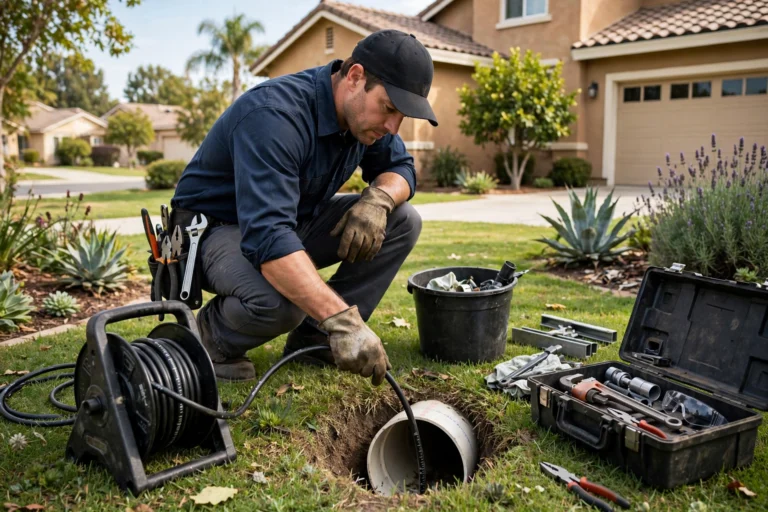
- Underground inspection — for any new sewer lateral, water service, or under-slab plumbing: the inspector checks pipe material, bedding, slope, and depth before anything is backfilled or poured.
- Rough plumbing inspection — the big one. Water lines get pressure-tested (typically held at 100+ PSI), DWV gets a water or air test, gas lines get pressure-tested, and the inspector verifies venting, cleanout placement, fixture spacing, and seismic strapping provisions. Nothing gets covered until this passes.
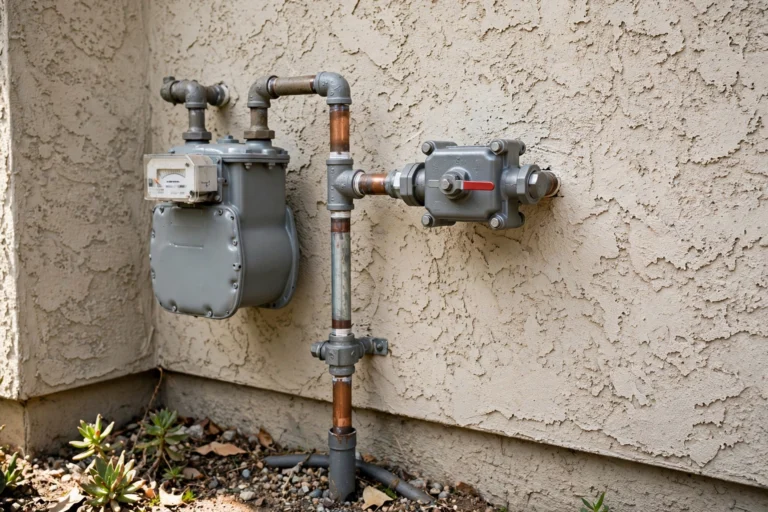
- Gas test and meter set — SoCalGas has its own requirements before setting a meter on new gas piping, including the pressure test documentation.
- Final plumbing inspection — after trim-out: fixtures set, water heater installed with seismic strapping, PRV and expansion tank verified, everything operational.
The single most common delay we see: failed rough inspections over venting details and cleanout placement — both easy to get right on paper and annoying to fix after framing. A plumber who does new construction regularly knows the local inspectors’ expectations; that familiarity is worth more than a slightly lower bid from a remodel-only shop.
Code Decisions Worth Getting Right Now
A rebuild is a once-in-a-generation chance to build the plumbing system correctly rather than inheriting one. Decisions that cost little at rough-in and a fortune later:
- Oversize nothing, but don’t undersize: Have the plumber run proper fixture-unit calculations for drain sizing and a real demand calculation for the water service. Undersized drains and water lines are the most common rough-in regret.
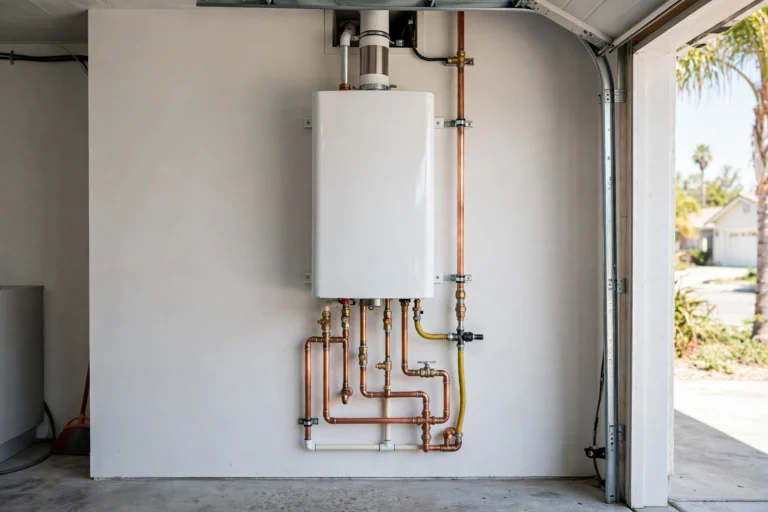
- Plan for the water heater you’ll actually buy: Tankless needs a larger gas line, specific venting, and a condensate drain — all trivial at rough-in, all expensive as retrofits. Decide now; see tankless vs. tank costs.
- Seismic strapping and shut-off provisions: California requires seismic strapping for water heaters and seismic gas shut-off valves in new construction — plan their locations during rough-in, not as afterthoughts. More on valves in our seismic valve guide.
- Cleanouts everywhere they should be: Code-minimum cleanout placement is exactly that — minimum. Extra cleanouts at key junctions make future maintenance dramatically easier.
- Future-proof the walls: If an ADU, bathroom addition, or outdoor kitchen is even a remote possibility, stubbing capped lines during rough-in costs a few hundred dollars now versus thousands later.
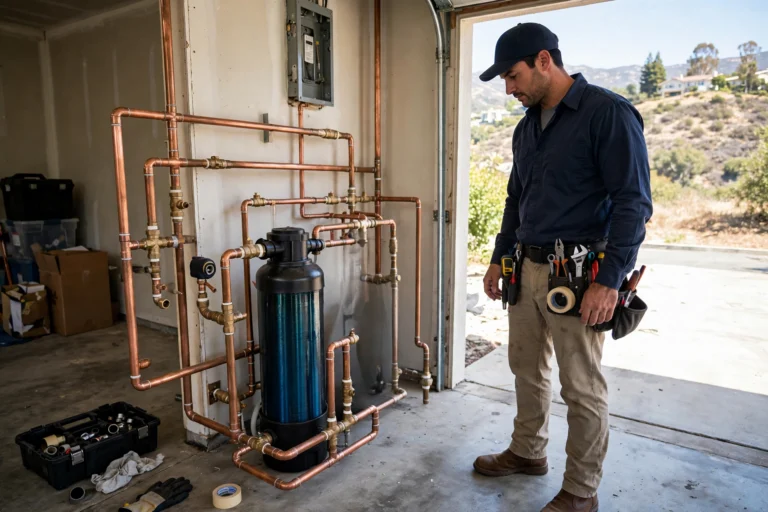
- Water treatment loop: In the valley’s hard water, have the plumber install a softener loop (bypass piping) during rough-in even if you don’t buy the softener yet. Retrofitting the loop later means cutting into finished walls.
Choosing the Plumber for a Rebuild
Rebuild rough-in is new-construction plumbing, a different skill set from service and repair. Look for a licensed C-36 contractor with recent new-construction or major-remodel experience in LA County — ask for addresses of recent rough-in jobs, not just references. Verify the license at cslb.ca.gov, confirm they pull the permits themselves (never let permits slide to the homeowner on a rebuild), and get the inspection sequence and who’s-present expectations in writing. The cheapest rough-in bid on a rebuild is rarely the cheapest rebuild.
What to Do Monday Morning: Your Action Steps
- Confirm your permit jurisdiction and valuation basis. Unincorporated Altadena = LA County Public Works. Know how your permit fees are calculated so the plumbing scope’s share holds no surprises.
- Interview plumbers for new-construction experience specifically. Ask: “How many rough-ins did you do last year, and in which cities?” Service plumbers and new-construction plumbers are different trades in practice.
- Lock the water heater decision before rough-in. Tank vs. tankless changes gas sizing, venting, and condensate routing — deciding after the walls close is a $2,000+ mistake.
- Walk the framed house with the plumber before inspection. Verify every fixture location against your plans while pipe is still exposed. Moving a stub-out takes minutes now and a drywall crew later.
Rebuilding takes enough patience without plumbing surprises — getting the rough-in right is how you keep the rest of the project on rails. Plumbers in Altadena connects San Gabriel Valley homeowners with licensed C-36 contractors experienced in rebuild and new-construction plumbing, including Altadena projects. For guidance on your specific plans, call (888) 555-0199.
What inspections does plumbing rough-in require in LA County?
Typically an underground inspection (before backfill/pour), the rough plumbing inspection (pressure tests on water and gas lines, DWV testing, venting and cleanout verification — before drywall), and a final inspection after fixtures are set. SoCalGas also requires pressure-test documentation before setting a meter on new gas piping.
How much does plumbing rough-in cost for a rebuild?
It varies widely with home size and fixture count, but budget $12,000–$30,000+ for full rough-in plumbing on a typical single-family rebuild in LA County, plus permit fees of $800–$2,000+. Get itemized bids from new-construction-experienced plumbers — the range reflects real scope differences.
Should I decide on tank vs. tankless before rough-in?
Yes — this is one of the highest-leverage early decisions. Tankless requires a larger gas line, different venting, and a condensate drain. Installing those provisions during rough-in costs little; retrofitting them into finished walls costs thousands.
PEX or copper for new construction in California?
Both are code-approved. Most new-construction plumbers in the valley default to PEX for distribution (faster, freeze-tolerant, scale-resistant) with copper for exposed or high-visibility runs. Either is fine if installed to code — installer quality matters more than material here.
Can I add plumbing for a future ADU during the rough-in?
Absolutely, and it’s the smartest time to do it. Stubbing capped water, drain, and vent lines for a future ADU or bathroom addition during rough-in costs a few hundred dollars versus thousands once walls are finished. Tell your plumber about any future plans upfront.
Need a Plumber Right Now?
Don’t wait for a small leak to become a big bill. Our licensed local plumbers answer 24/7 — nights, weekends, and holidays.
(888) 555-0199
Average emergency response under 60 minutes across the San Gabriel Valley