What Is a Whole-House Repipe, and When Does Your Home Need One?
“You need a repipe” is one of the most expensive sentences a plumber can say — and one of the most oversold. But in San Gabriel Valley foothill homes with original galvanized steel or corroding copper, a whole-house repipe is sometimes genuinely the right call. Here’s what a repipe actually involves, what it costs in 2026, and how to tell whether you need one or just a targeted repair.
A repipe is a big decision — our whole-house repipe service page has 2026 pricing. Hard water may be why your pipes failed: how SGV hard water attacks pipes.
What a Repipe Actually Is
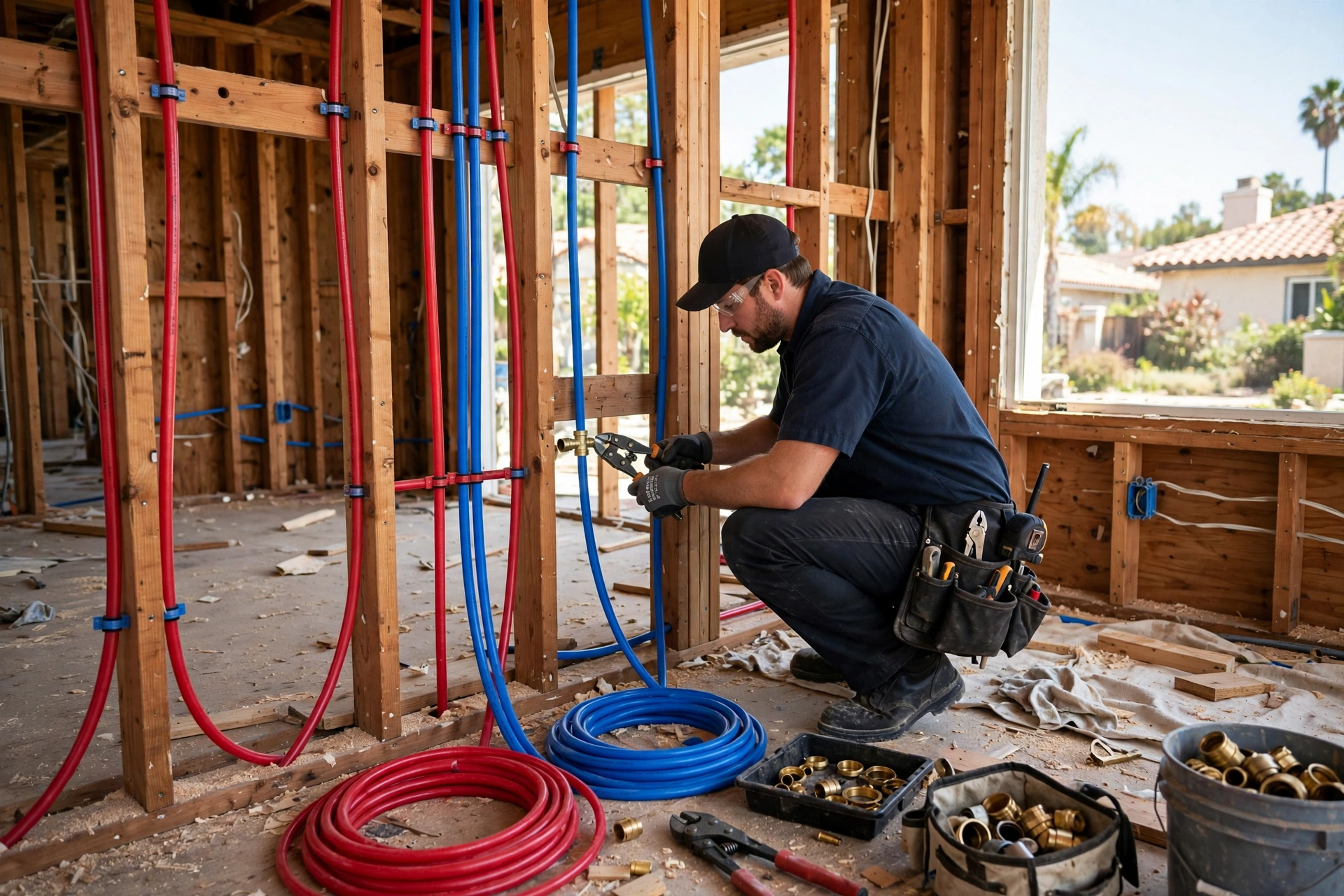
A whole-house repipe replaces every hot and cold water supply line in the home — from the meter or main shutoff through the walls to each fixture. It does not include the sewer lateral or drain lines (that’s a separate job). Modern repipes use Type L copper or PEX tubing. In California, PEX has become the default for retrofits: it’s flexible enough to fish through walls with fewer openings, resists scale and corrosion, and costs less in labor. Copper remains popular for exposed runs and for homeowners who simply prefer it, at a higher price.
The process typically takes 2–5 days for an average single-family home: a crew maps the runs, opens strategic access points in drywall, pulls the new lines, connects fixtures, pressure-tests, patches the drywall, and gets the work permitted and inspected. You’ll be without water during working hours on pipe-swap days, but a good crew stages the work so you’re not dry overnight.
Signs Your Home Genuinely Needs a Repipe
One symptom is a repair. Several together are a pattern:
- Discolored water — rusty or brown water on first draw, especially from hot taps, means interior pipe corrosion is shedding into your water.
- Chronic low pressure — when fixtures throughout the house run weak and the PRV and fixtures check out, the pipes themselves are narrowed by scale and corrosion.
- Recurring pinhole leaks — one pinhole leak is bad luck; two or three in a year is a system telling you it’s done. Copper pinholes are the classic sign in homes with aggressive or hard water.
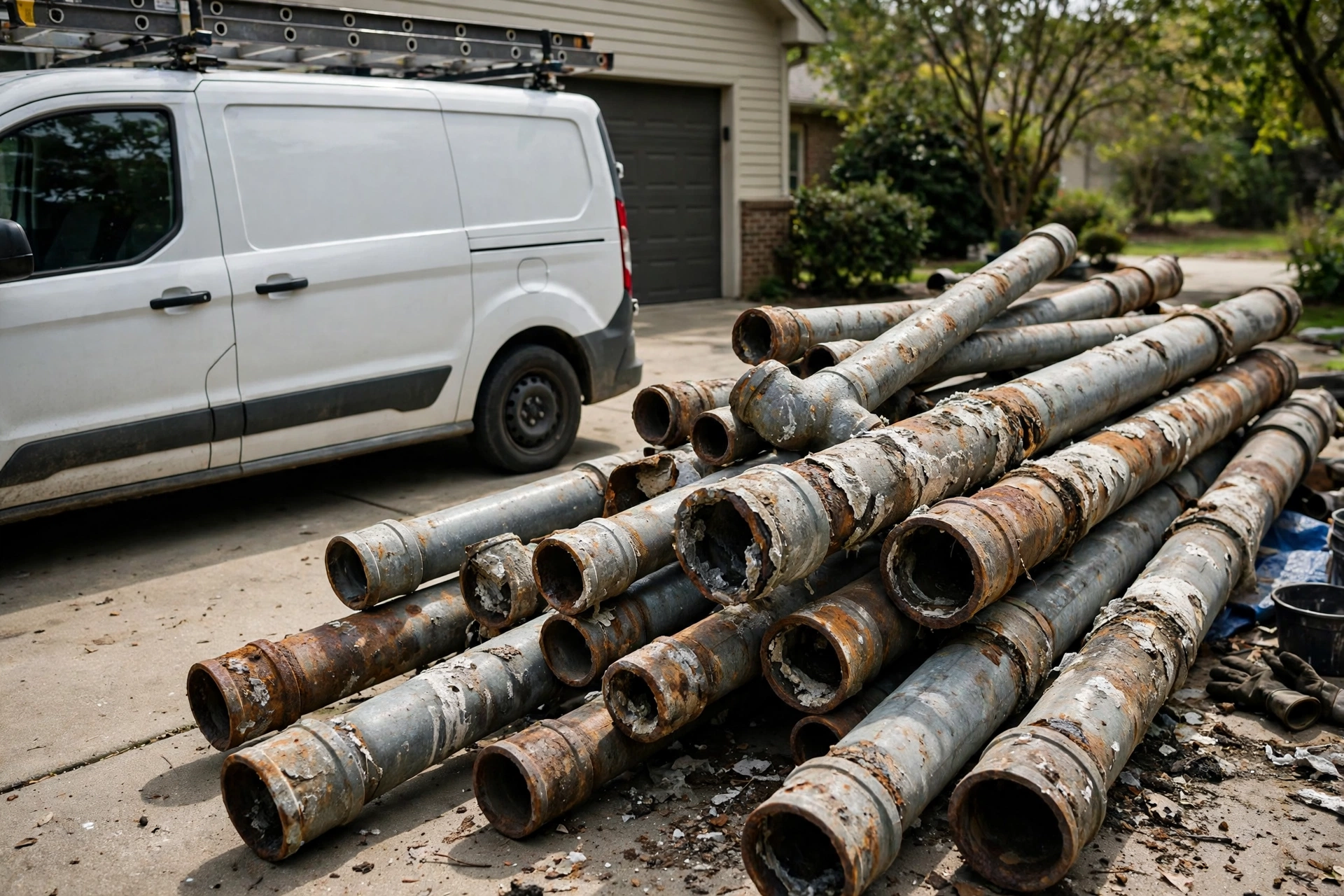
- Visible corrosion — green crust on copper joints, flaking or rust on galvanized lines in the crawlspace or garage.
- Age + material — galvanized steel past 50 years is living on borrowed time; many foothill homes still have it. Polybutylene (gray plastic, 1978–1995) should be replaced on sight.
Hard water accelerates all of this. If your home has 10–20 grain-per-gallon water and original pipes, the two problems compound — read what valley hard water does to pipes for the full picture.
What a Repipe Costs in the San Gabriel Valley (2026)
For a typical 1,500–2,500 sq ft home with 2 bathrooms:
- PEX repipe: $5,000–$10,000
- Copper repipe: $9,000–$16,000+
Price moves with the number of fixtures, stories (two-story homes cost more), slab vs. raised foundation (slab homes often route through the attic), and how much drywall patching and texture-matching is included. Get the drywall scope in writing — “patch and texture to match” versus “rough patch only” is a common source of surprise costs. Permits and inspection are standard; any contractor quoting a repipe “without the hassle of permits” is one to avoid.
When a Repipe Is Overkill
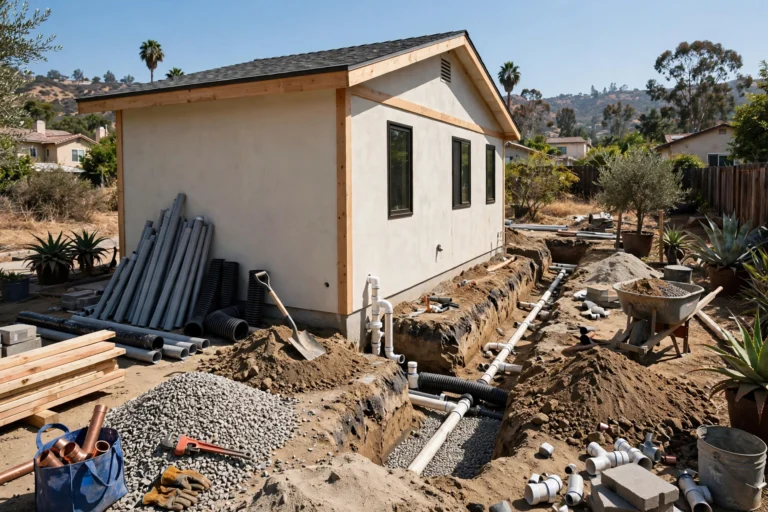
Not every old pipe needs full replacement. A single failed section, one bad run to a bathroom, or an isolated leak can often be repaired or partially repiped for a fraction of the cost. If your home already has copper in good condition with one problem area, spot repair is the honest answer. Also be wary of the high-pressure sales playbook: a company that “happens to have a crew in your neighborhood” and offers a today-only price is selling, not diagnosing. Get a second opinion on any repipe quote over $8,000 — reputable plumbers expect it.
What to Ask Before You Sign
- PEX or copper — and why for my house specifically?
- How many drywall openings, and who patches and textures?
- Is the permit and inspection included, and will I get the signed-off permit card?
- What warranty covers the workmanship (not just the pipe manufacturer’s warranty)?
- Will you replace angle stops, supply lines, and the PRV if needed while the walls are open?
What to Do Monday Morning: Your Action Steps
- Run the two-minute tests. Check water color on first draw from a hot tap, test pressure at a hose bib with a $15 gauge, and look at exposed pipes in the garage or crawlspace for green crust or flaking.
- Count your pinholes. One leak in five years is a repair. Two or more in twelve months is a system verdict — start getting repipe quotes instead of repair quotes.
- Get two itemized quotes. Ask each contractor for PEX vs. copper pricing, the drywall patching scope in writing, and whether permit, inspection, and workmanship warranty are included.
- Ask about the while-you’re-in-there items. New angle stops, supply lines, and PRV replacement cost little extra when walls are already open — and cost plenty as standalone jobs later.
A repipe is major surgery on your home’s circulatory system — it deserves a licensed C-36 plumbing contractor with a local reputation, not the cheapest bid on a flyer. Plumbers in Altadena connects San Gabriel Valley homeowners with experienced local plumbers for whole-house repipes — and honest second opinions when you’re not sure. Homeowners in the foothills can also reach our Sierra Madre and Arcadia service pages. To talk through your situation, call (888) 555-0199.
How long does a whole-house repipe take?
Most single-family homes take 2–5 days for the plumbing work itself, plus drywall patching and paint. Larger or two-story homes can run a full week. You’ll typically have water back each evening.
Is PEX or copper better for a repipe in California?
Both are code-approved. PEX is cheaper, faster to install, and resists scale and corrosion — the practical choice for most retrofits. Copper costs more but some homeowners prefer it for durability perception and exposed runs. In hard-water areas, PEX has a real advantage against scale buildup.
Does a repipe include the sewer line?
No. A repipe covers the pressurized water supply lines only. Sewer and drain lines are a separate system — see our guide to sewer line repair and replacement.
Do I need a permit for a repipe in LA County?
Yes. Repipes require a plumbing permit and inspection in every San Gabriel Valley city. The permit protects you — it verifies proper materials, pressure testing, and code compliance. Be suspicious of any contractor who suggests skipping it.
Will a repipe increase my home’s value?
It removes a major red flag for buyers and inspectors — old galvanized or polybutylene is a common inspection kill-shot. You may not recover 100% of the cost at sale, but it eliminates a negotiating weapon and prevents the emergency-repair premium.
Need a Plumber Right Now?
Don’t wait for a small leak to become a big bill. Our licensed local plumbers answer 24/7 — nights, weekends, and holidays.
(888) 555-0199
Average emergency response under 60 minutes across the San Gabriel Valley