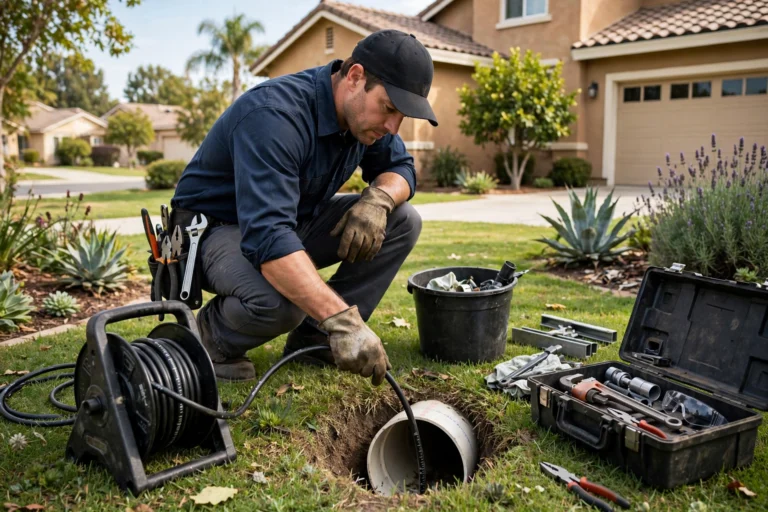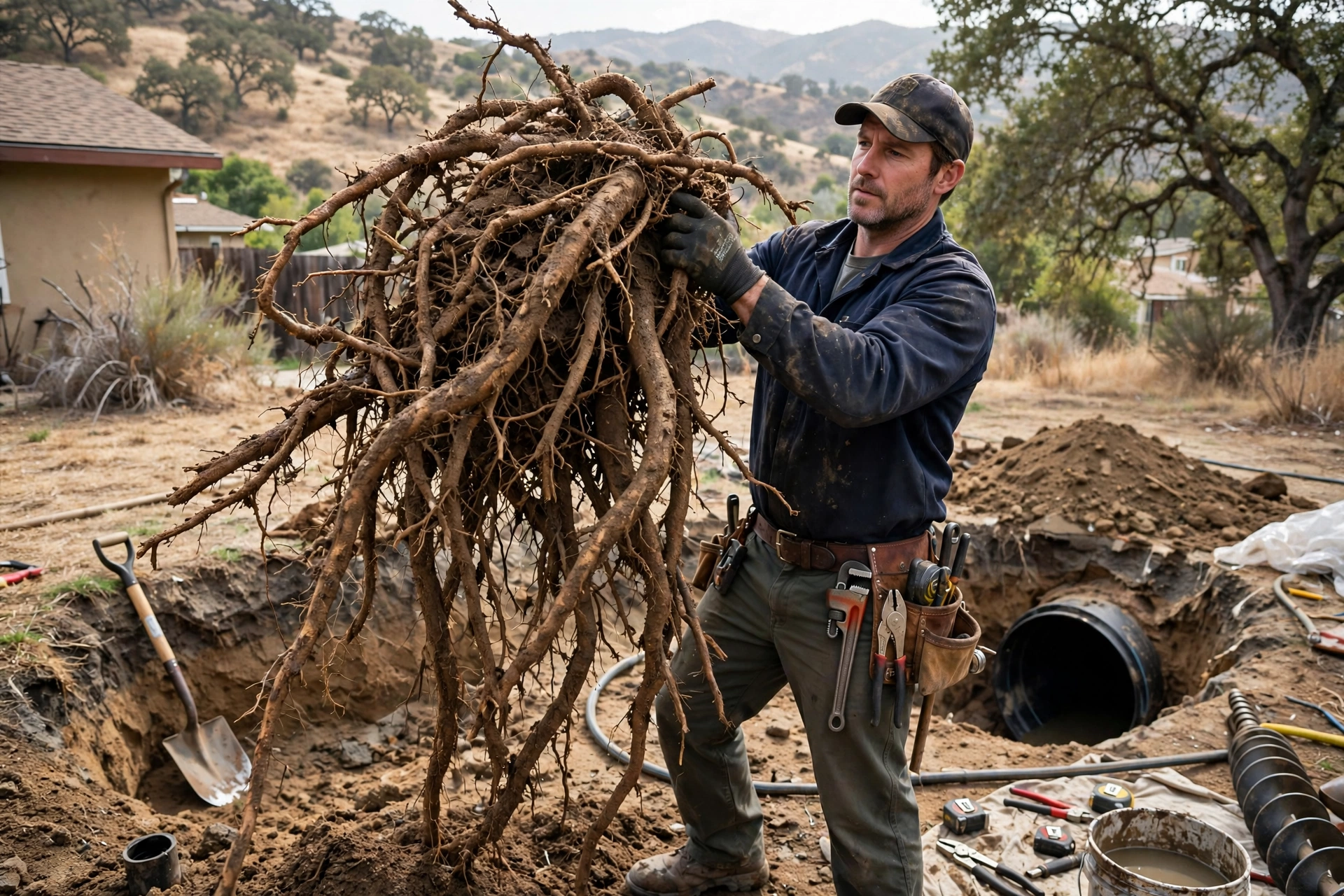
Why Do Foothill Homes Get So Many Sewer Backups? Tree Roots Explained
Ask any plumber who works the San Gabriel Valley foothills what causes most sewer backups, and you won’t wait long for the answer: tree roots. The combination of 60-year-old clay pipes, thirsty mature trees, and long dry seasons makes root intrusion the number-one sewer problem from Altadena to La Cañada Flintridge. Here’s exactly how roots get in, why foothill homes are especially vulnerable, and what actually works — short-term and permanently.
Roots mean recurring clogs — our drain cleaning with hydro jetting cuts them back. If the line is collapsed, read the warning signs.
How Roots Get Into Your Sewer Line
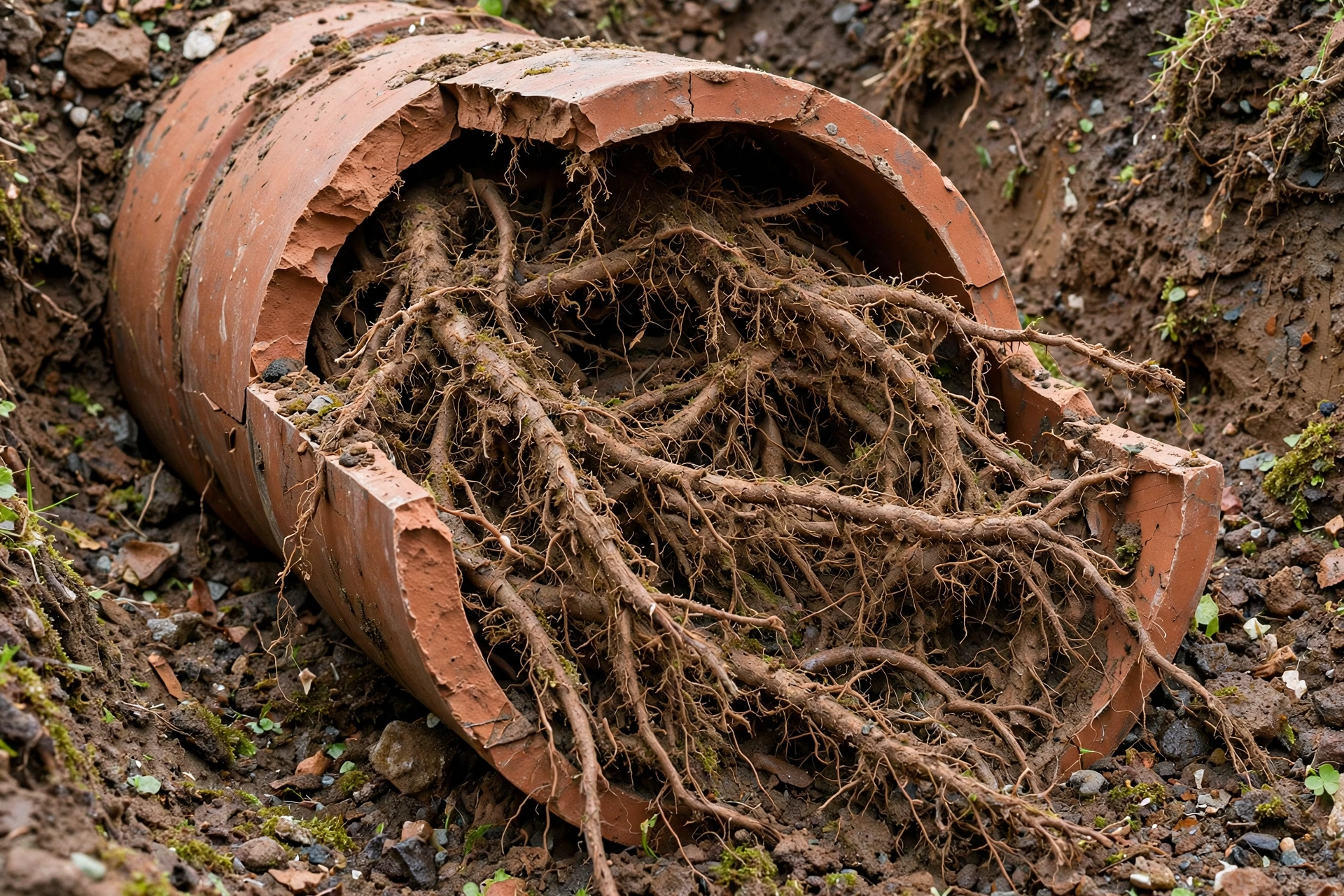
Tree roots don’t “break into” healthy pipe — they exploit weaknesses that already exist. Clay (vitrified clay) sewer laterals, standard in homes built from the 1920s through the 1960s, are made of short segments joined every 2–3 feet. Those joints were sealed with materials that shrink, crack, and shift over decades. A root hair thinner than a thread detects the moisture and nutrients escaping from a hairline joint gap and grows toward it. Once inside, the root mass expands — and a root system can exert astonishing force, wedging joints apart and cracking pipe walls further.
Inside the pipe, roots form a fibrous net that catches everything flowing past: paper, grease, solids. The line doesn’t block all at once — it narrows over months until one day the system can’t pass a normal load and sewage backs up into the lowest fixture. That’s why root backups often seem to come “out of nowhere” after years of quiet buildup.
Why Foothill Homes Are Prime Targets
Three local factors stack the deck:
- Old clay laterals everywhere. The foothill neighborhoods with the most mature trees — Altadena, Sierra Madre, San Marino, South Pasadena — are the same neighborhoods built out in the clay-pipe era. The pipe and the trees aged together.
- Thirsty trees, dry summers. Deodar cedars, camphor trees, ficus, liquidambars, and coast live oaks — the valley’s signature mature landscaping — send roots far and wide searching for water during months of no rain. A sewer lateral leaking even slightly is an oasis.
- Hillside lots and shifting soil. Slope creep and minor seismic movement over decades offset clay joints just enough to open gaps. A quarter-inch offset is a doorway for roots.
Ficus deserves special mention: its aggressive surface roots are notorious for finding sewer lines, and many foothill homes have one planted far too close to the house. If you’re planning landscaping, keep thirsty species at least 20 feet from your lateral’s path — and know where that path is before you plant.
What Actually Works: Short-Term Relief
When roots are already in the line, you have two clearing options:
- Mechanical root cutting (snaking with a root cutter): $200–$450. A spinning blade head shears the root mass out of the pipe. Fast and effective — but temporary. Roots grow back through the same openings, typically within 6–18 months depending on the tree and the season.
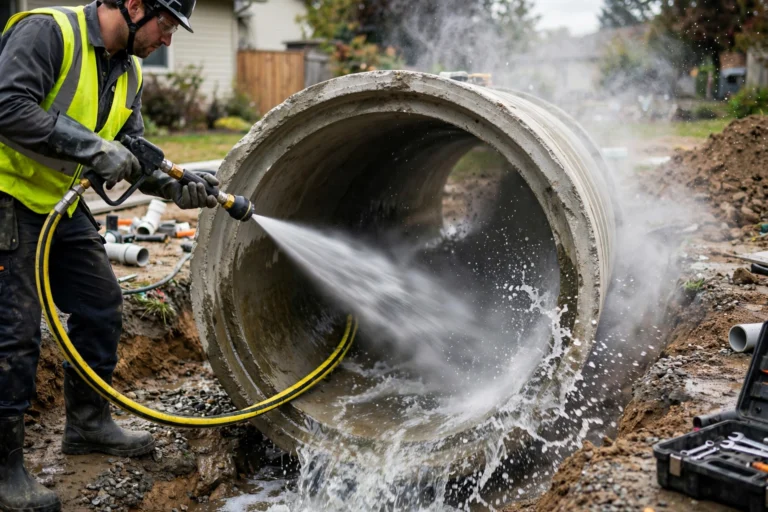
- Hydro jetting: $400–$800. High-pressure water scours the pipe walls clean, removing roots plus the grease and scale they’ve been collecting. Cleans more thoroughly than cutting and gives the camera a clear view afterward. For the full comparison, see drain cleaning vs. hydro jetting.
Copper sulfate root treatments (foaming products flushed down a toilet) can slow regrowth between cleanings, but they’re maintenance, not a fix — and they do nothing for the cracked joints that let roots in. Think of them as buying time, which is sometimes exactly what you need.
The Permanent Fixes
Clearing treats the symptom. Only three things stop roots permanently:
- Spot repair of the affected section — if the camera shows damage confined to one area.
- Trenchless rehabilitation — pipe bursting installs seamless HDPE with no joints for roots to exploit; CIPP lining seals every crack and joint from the inside.
- Full sewer lateral replacement — new PVC with properly glued joints and correct grade.
The economics are straightforward: if you’re paying $300+ for root clearing every year or two, the payback on a permanent fix arrives fast — and each emergency backup carries its own costs in damage, cleanup, and stress. The camera inspection ($250–$400) is what tells you whether you’re a spot-repair candidate or a replacement candidate. Learn the warning signs in our foothill sewer failure guide.
What to Do Monday Morning: Your Action Steps
- Find out what your lateral is made of. If your home was built before ~1970 and the lateral was never replaced, assume clay until a camera proves otherwise.
- Note which trees sit near the lateral’s path. Big thirsty trees within 20–30 feet of the line are your prime suspects. The lateral usually runs in a straight line from your cleanout toward the street.
- Schedule a camera inspection before the next backup — ideally after a jetting so the camera sees pipe, not root mass. Keep the video file.
- Do the repeat-cleaning math. Add up what you’ve spent on root clearing in the last 3 years. If it’s approaching a third of a permanent fix, stop renting relief and buy the cure.
Roots are relentless, but they’re also predictable — and a camera takes the guesswork out entirely. Plumbers in Altadena connects San Gabriel Valley homeowners with licensed C-36 contractors for root clearing, camera inspections, and permanent repairs across Altadena, Arcadia, La Cañada Flintridge, and beyond. Call (888) 555-0199 and get eyes inside the pipe.
How do I know if tree roots are causing my sewer backup?
The telltale pattern is recurring backups every 6–18 months that clear with snaking and return, especially if you have large trees near the sewer line’s path. A camera inspection gives a definitive answer — you’ll see the root masses on video.
How much does it cost to remove roots from a sewer line?
Mechanical root cutting runs $200–$450; hydro jetting runs $400–$800. Both are temporary — roots grow back through the same cracks and joints. Permanent repair (spot fix, trenchless, or replacement) is the only lasting solution.
Do chemical root killers work?
Foaming copper-sulfate products can slow regrowth between mechanical cleanings, but they don’t repair the cracked joints that admit roots. They’re maintenance, not a fix — useful for buying time, not for solving the problem.
Which trees are worst for sewer lines?
In the San Gabriel Valley: ficus, liquidambar (sweetgum), camphor, deodar cedar, willows, and oaks are the most aggressive root invaders. Keep thirsty species at least 20 feet from your lateral — and know the lateral’s path before planting anything.
Will removing the tree fix my sewer problem?
No — removing the tree stops new root growth but doesn’t repair the cracked joints and damaged pipe the roots already exploited. The pipe still needs repair or replacement. And roots from neighboring trees can still reach your line.
Need a Plumber Right Now?
Don’t wait for a small leak to become a big bill. Our licensed local plumbers answer 24/7 — nights, weekends, and holidays.
(888) 555-0199
Average emergency response under 60 minutes across the San Gabriel Valley