Trenchless vs. Traditional Sewer Replacement: Cost and When Each Makes Sense
When your sewer lateral fails, you’ll hear two pitches: trenchless companies promising “no digging” and traditional excavators warning that trenchless is a shortcut. The truth is boring and useful — each method wins in different situations, and the wrong choice wastes thousands. Here’s an honest breakdown of pipe bursting, CIPP lining, and traditional dig-and-replace, with real 2026 San Gabriel Valley costs.
Still weighing options? Our trenchless sewer repair page details the process — and 7 signs your sewer line is failing helps you decide how urgent it is.
The Three Methods, Plainly Explained
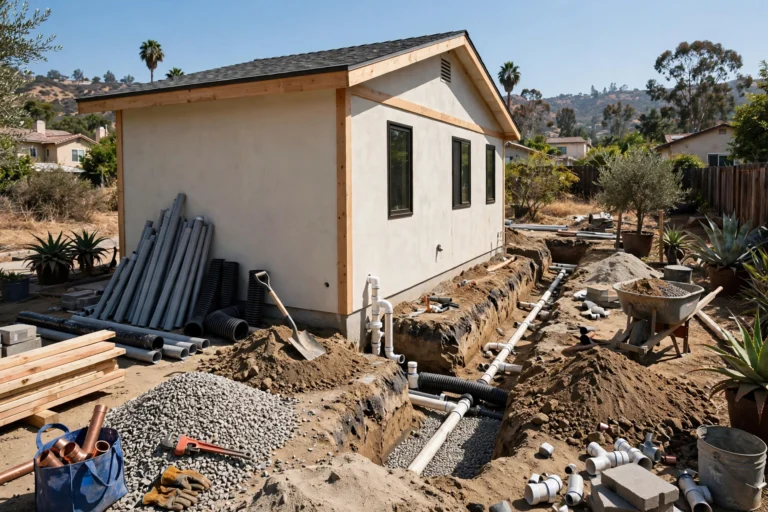
Traditional excavation (dig and replace): A trench is dug along the pipe’s path, the old pipe is removed, new pipe (usually SDR-35 PVC or ABS) is laid on proper bedding at the correct slope, and the trench is backfilled. It’s the oldest method and still the gold standard for control — the plumber sees everything and sets grade exactly.
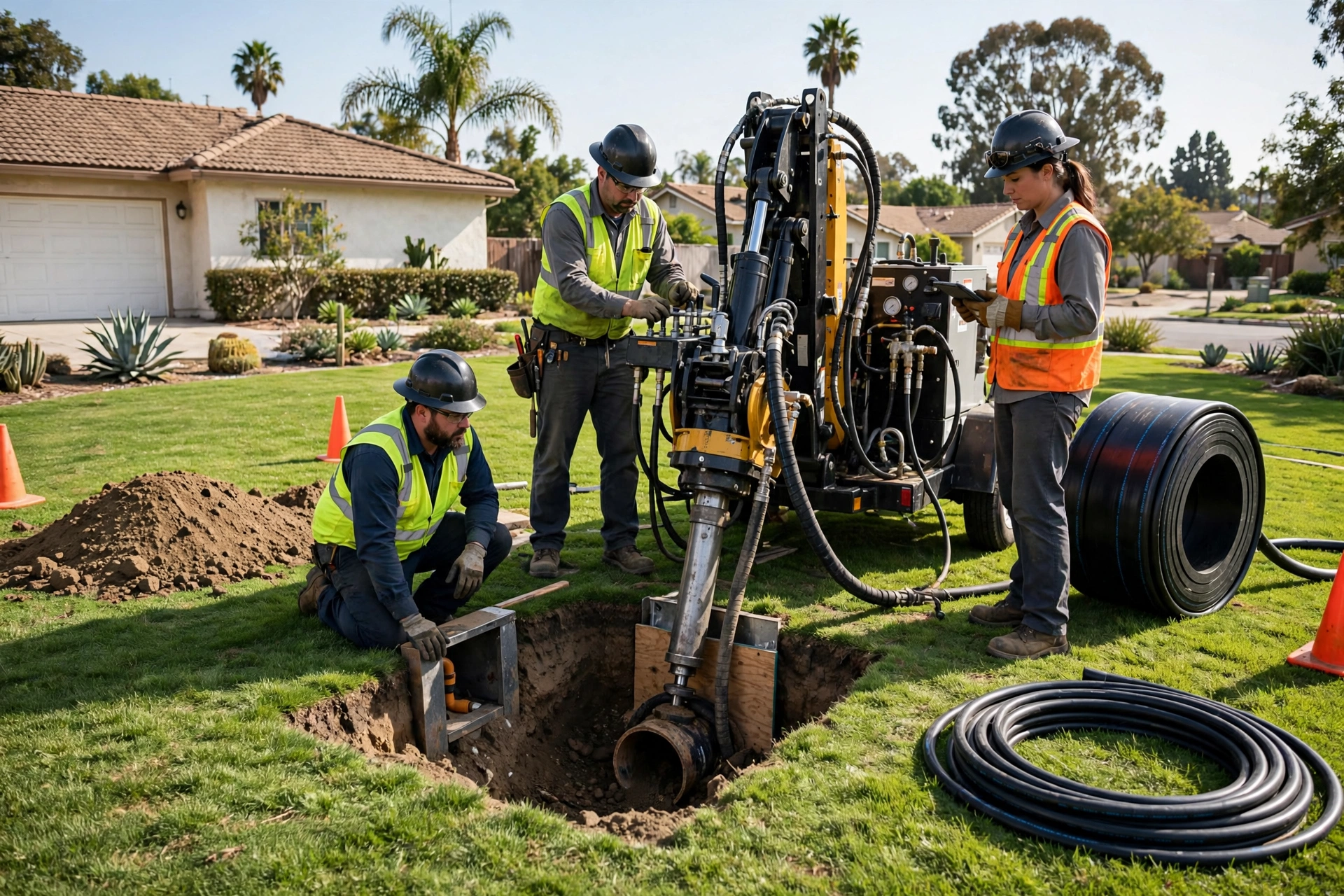
Pipe bursting (trenchless): A bursting head is pulled through the old pipe, fracturing it outward while towing a new HDPE pipe into place behind it. Requires only entry and exit pits. The new pipe is seamless, root-proof at joints (there are no joints), and often slightly larger in diameter than the old line.
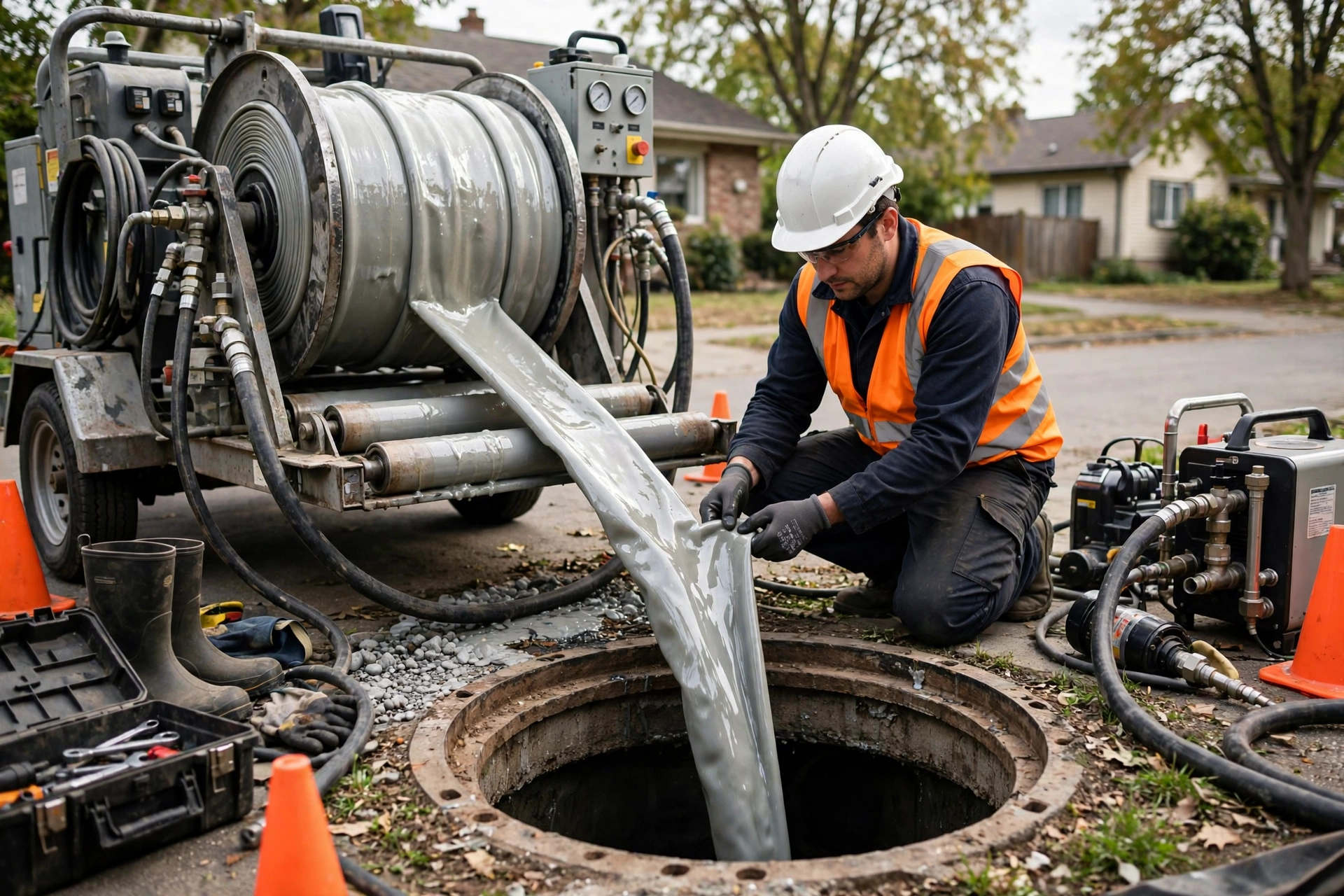
CIPP lining (trenchless): A resin-saturated liner is inverted into the old pipe and cured in place, creating a “pipe within a pipe.” Needs only small access points. Best for pipes that are cracked or root-invaded but still structurally holding their shape.
Side-by-Side Comparison
| Method | Typical Cost (SGV, 2026) | Disruption | Lifespan |
|---|---|---|---|
| Traditional excavation | $8,000–$20,000+ (up to $25,000+ for deep, long, or under-structure runs) | High — open trench through yard, driveway, or landscaping; 3–7 days of work plus restoration | 50–100 years (new PVC/ABS) |
| Pipe bursting | $10,000–$22,000 | Low — two small pits; landscaping largely intact; usually 1–2 days | 50–100 years (new HDPE) |
| CIPP lining | $7,000–$15,000 | Lowest — small access points; often done in a day | 30–50 years (liner dependent) |
Note the overlap: trenchless isn’t automatically cheaper. Pipe bursting often costs more than a straightforward dig because of the specialized equipment. Trenchless saves money when the alternative is expensive restoration — tearing up a new driveway, mature landscaping, a patio, or a hillside. When the pipe runs under open dirt, digging is usually the better value.
When Trenchless Is the Right Call
- The lateral runs under a driveway, patio, pool deck, or mature landscaping you’d pay thousands to restore.
- The pipe is cracked, offset at joints, or root-invaded but still has its basic shape and grade (good lining candidates).
- You need the job done fast — trenchless is typically 1–2 days versus up to a week.
- Access for excavation equipment is limited (tight side yards, steep hillside lots common in the foothills).
When Traditional Excavation Wins (The Honest Part)
Trenchless marketing rarely mentions this, so we will:
- Collapsed pipe: If the pipe has fully collapsed or lost its shape, there’s nothing to burst through or line — it has to be dug up.
- Grade problems: A “belly” (sagging section that holds water) or incorrect slope can’t be fixed trenchlessly. Lining follows the existing grade, flaws included. Only excavation re-establishes proper fall to the main.
- Undersized or wrong-material pipe: If the line needs upsizing or the material itself is the problem (Orangeburg pipe, which deforms), replacement beats rehabilitation.
- Under structures: Pipe under a home addition or garage where bursting could disturb the structure — sometimes the controlled approach is open excavation.
- Open, easy digging: When the lateral runs under plain lawn with clear access, traditional replacement is often $2,000–$5,000 cheaper than bursting for an equivalent new pipe. Don’t pay a trenchless premium to protect grass.
A reputable contractor recommends the method that fits the camera footage — not the method they happen to sell. If a company only offers one method, get a second opinion from one that offers both. For the warning signs that lead to this decision, see 7 signs your sewer line is failing.
What to Do Monday Morning: Your Action Steps
- Get the camera footage first. Every method decision flows from what the camera shows: cracks and roots (trenchless candidate) versus collapse or bellies (dig it up). Never accept a method recommendation without seeing the video.
- Ask specifically: “Is my pipe a lining candidate, and why?” The answer reveals whether the contractor actually evaluated your pipe or just sells one method.
- Price the restoration, not just the pipe. Get the dig quote with full restoration (concrete, landscaping, permits for street work) and compare apples to apples against trenchless.
- Check the warranty in writing. Reputable trenchless work carries 10–50 year warranties on materials; traditional replacement should include a workmanship warranty on the installation. Verbal warranties are worth nothing.
Sewer replacement is a five-figure decision you’ll live with for decades — it’s worth one camera inspection and two informed quotes. Plumbers in Altadena connects San Gabriel Valley homeowners with licensed C-36 contractors who do both trenchless sewer repair and traditional sewer line replacement, so the recommendation fits your pipe — including San Marino and South Pasadena neighborhoods. Call (888) 555-0199 to start with the camera inspection.
Is trenchless sewer repair cheaper than digging?
Not always. CIPP lining ($7,000–$15,000) can undercut a dig, but pipe bursting ($10,000–$22,000) often costs more than straightforward excavation ($8,000–$20,000). Trenchless saves money when it avoids expensive restoration of driveways, patios, or landscaping — not on open, easy-to-dig ground.
How long does trenchless sewer repair last?
Pipe bursting installs a brand-new HDPE pipe rated 50–100 years — equivalent to new construction. CIPP liners are typically rated 30–50 years depending on the resin and installation quality.
Can tree roots grow through trenchless pipe?
Through pipe bursting’s seamless HDPE, effectively no — there are no joints for roots to exploit. CIPP liners also block root entry at cracks and joints. Roots can still enter at the connection points if those aren’t sealed, which is why the tie-ins matter.
When can’t trenchless be used?
Fully collapsed pipe, severe bellies or grade problems, and situations where the pipe path or size must change all require excavation. A camera inspection determines candidacy — any contractor quoting trenchless without camera footage is guessing.
Do I need a permit for sewer lateral replacement?
Yes, in every San Gabriel Valley city — plus often an encroachment permit for work under sidewalks or streets. Permit costs run $300–$2,000 depending on the jurisdiction and scope. Unpermitted sewer work is a resale nightmare; verify the permit is in the quote.
Need a Plumber Right Now?
Don’t wait for a small leak to become a big bill. Our licensed local plumbers answer 24/7 — nights, weekends, and holidays.
(888) 555-0199
Average emergency response under 60 minutes across the San Gabriel Valley