Water Heater Making Noise? Sediment, Hard Water, and When to Replace
Popping, rumbling, crackling, or banging from your water heater isn’t the unit “settling” — it’s sediment talking. In the San Gabriel Valley, where municipal water runs 10–20 grains per gallon of hardness, mineral sediment builds up in tank water heaters faster than almost anywhere in the state. Here’s what each noise means, what you can do about it, and how to tell when the heater is asking for retirement.
Noisy heater often means it’s time — see repair vs. replacement guidance. Considering an upgrade? Tankless vs. tank: true California costs.
What the Noises Mean
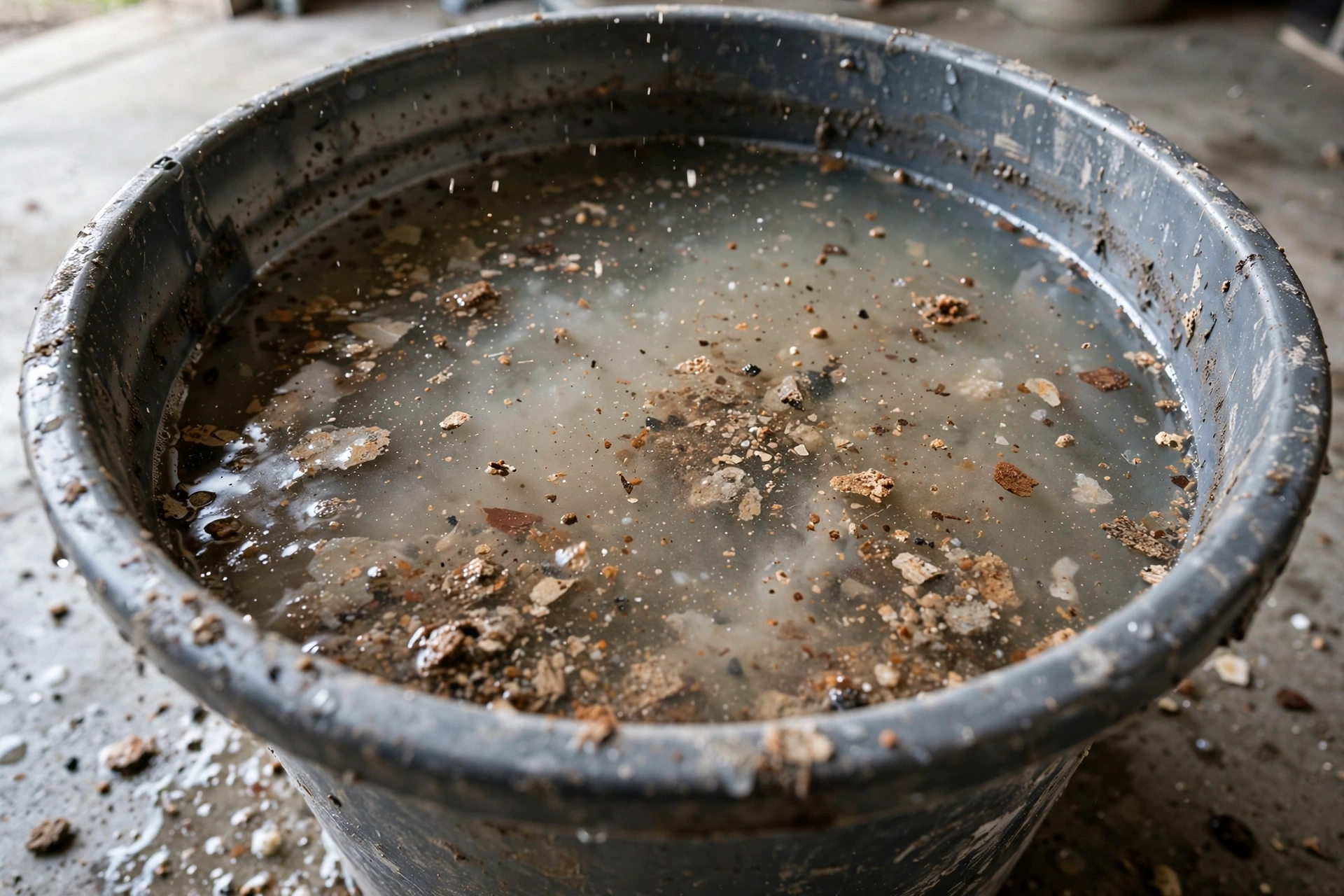
- Popping or rumbling: The classic sediment sound. Mineral deposits blanket the tank bottom; water trapped beneath the sediment layer boils into steam bubbles that collapse with a pop. The thicker the sediment, the louder the rumble. This is the sound of your heater working overtime.
- Crackling or hissing: Often condensation on a cold tank or minor scale on heating elements (electric units). Less urgent than rumbling, but worth watching.
- Banging or hammering: Could be sediment, but could also be water hammer — pressure spikes from fast-closing valves. If banging happens when fixtures shut off rather than during heating, suspect water hammer and check your PRV and expansion tank.
- Sizzling or dripping sounds: Water hitting the hot burner area means an active leak — possibly the tank itself. Check the base for moisture immediately.
Location matters too: noises from the bottom of the tank point to sediment; noises from the top can indicate a failing dip tube or inlet issues.
Why Hard Water Makes It Worse Here
Every gallon of valley water carries dissolved calcium and magnesium. Heat accelerates precipitation — the minerals drop out of solution fastest exactly where the water is hottest, which is the tank bottom around the burner or lower element. A tank in 15-grain water that has never been flushed can accumulate inches of sediment in under a decade, and that sediment:
- Insulates the tank from the heat source, forcing longer burner cycles and higher gas bills.
- Overheats the tank bottom, weakening the steel and accelerating tank failure — the rumbling you hear is literally the sound of the tank’s lifespan shortening.
- Buries the lower element (electric units), causing it to overheat and burn out prematurely.
- Eats the anode rod faster, since the rod works harder in mineral-heavy water. Once the rod is gone, the tank itself becomes the sacrificial metal.
This is why the valley’s hard water shortens tank life to 8–12 years versus the 12–15 you’d see in soft-water regions. The full hard-water picture is in our San Gabriel Valley hard water guide.
What You Can Do: Flushing and Maintenance
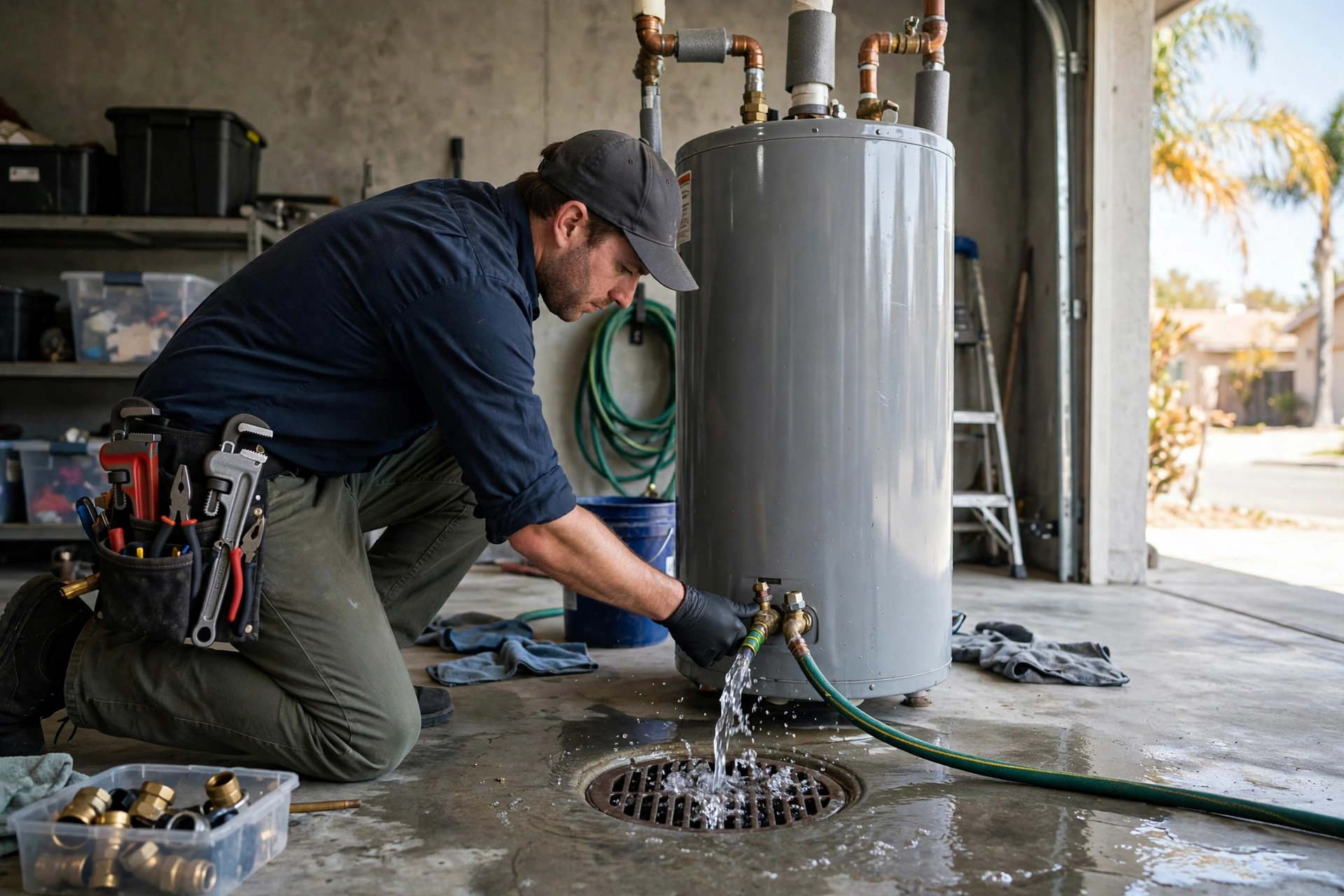
Draining/flushing the tank: Connect a hose to the drain valve, run it somewhere safe, and flush until the water runs clear. In the valley, do this annually — some plumbers recommend twice yearly for older tanks in the hardest zones. If the drain valve is plastic and original, be gentle: old plastic drain valves snap, and then you have a bigger problem. Many plumbers replace the cheap factory drain valve with a full-port brass ball valve during a service visit ($150–$250 as part of maintenance).
Anode rod check: The anode rod is a magnesium or aluminum rod that corrodes so your tank doesn’t have to. In hard water it can be consumed in 3–5 years. Checking it requires removing it from the top of the tank — if it’s down to a thin wire or coated in calcium, replace it ($200–$400 installed). A $50 rod can add years to a tank.
Warning: if your tank is 12+ years old and has never been flushed, a first flush can disturb sediment that’s been sealing small weaknesses — occasionally the flush reveals a leak that was already there. That’s the tank telling you it was done anyway, but go in with eyes open on very old units.
When Noise Means Replace, Not Repair
Flush the sediment and the noises usually quiet down — if the tank is fundamentally sound. Replace when you see:
- Age 10–12+ years with heavy sediment history — you’re past the design life in hard-water territory.
- Rusty or discolored hot water — the tank interior is corroding, and no flush fixes that.
- Moisture or rust at the tank base — the tank wall is failing. This is a “replace this week” situation, not a “monitor” one.
- Repeated element or thermostat failures (electric) — the sediment environment is destroying components faster than they’re worth replacing.
When replacement time comes, it’s worth running the full comparison — including whether your household is a candidate for tankless. See tankless vs. tank: true 2026 costs for the equipment-vs-labor breakdown, and our water heater installation page for service details.
What to Do Monday Morning: Your Action Steps
- Identify the noise. Popping/rumbling during heating = sediment. Banging when taps shut off = water hammer (check PRV pressure). Sizzling + moisture at the base = active leak, act today.
- Check the tank’s age. The manufacture date is on the rating plate (first digits of the serial number encode it). Over 10 years with noise = start planning replacement, not just maintenance.
- Flush it — or schedule one. If the tank is under 10 years and the drain valve works, flush until clear. If the valve is original plastic or the tank is very old, have a plumber do it and inspect the anode rod at the same time.
- Test your water hardness. If you’re above 10 grains per gallon, pair the flush with a plan: annual flushing plus a softener conversation. Otherwise you’re just resetting the countdown.
A noisy heater is a heater asking for attention — give it a flush before it gives you a flood. Plumbers in Altadena connects San Gabriel Valley homeowners with licensed C-36 contractors for water heater repair and installation in Pasadena, Altadena, and across the foothills. Call (888) 555-0199.
Why does my water heater rumble and pop?
Sediment — hardened mineral deposits from hard water — blankets the tank bottom. Water trapped beneath it boils into steam bubbles that collapse with popping and rumbling sounds. It’s the most common water heater noise in hard-water areas and a sign the tank needs flushing.
How often should I flush my water heater?
Annually at minimum in the San Gabriel Valley; twice a year for older tanks in the hardest water zones. Flushing removes sediment before it bakes onto the tank bottom and shortens the tank’s life.
Can sediment damage my water heater permanently?
Yes. Sediment insulates the tank bottom, causing overheating that weakens the steel, and it accelerates anode rod consumption. A heavily sedimented tank that’s never been flushed often fails years earlier than a maintained one.
Is it safe to flush a very old water heater myself?
Caution is warranted past 12 years: disturbing long-undisturbed sediment can reveal leaks at weak points. If the drain valve is original plastic, it may snap. For old tanks, have a plumber handle the first flush and inspect the anode rod simultaneously.
When should I replace instead of flushing?
Replace when the tank is 10–12+ years old with heavy sediment history, when hot water runs rusty (interior corrosion), when there’s moisture at the tank base (wall failure), or when components keep failing. At that point maintenance is good money after bad.
Need a Plumber Right Now?
Don’t wait for a small leak to become a big bill. Our licensed local plumbers answer 24/7 — nights, weekends, and holidays.
(888) 555-0199
Average emergency response under 60 minutes across the San Gabriel Valley