Drain Cleaning vs. Hydro Jetting: Which Does Your Home Need?
Slow drains, gurgling fixtures, a main line that backs up every year — when it’s time to clear the line, you’ll be offered two very different services: mechanical drain cleaning (snaking/augering) and hydro jetting. One costs half as much and takes an hour; the other actually cleans the pipe. Here’s how each works, what each costs in 2026, and how to choose without overspending or under-treating.
For tough blockages we recommend hydro jetting — and recurring backups may signal root intrusion in your sewer line.
Mechanical Drain Cleaning: The Snake
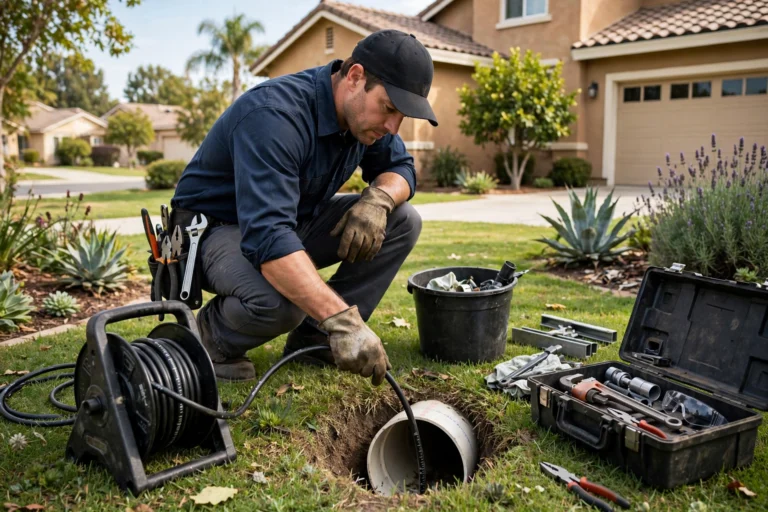
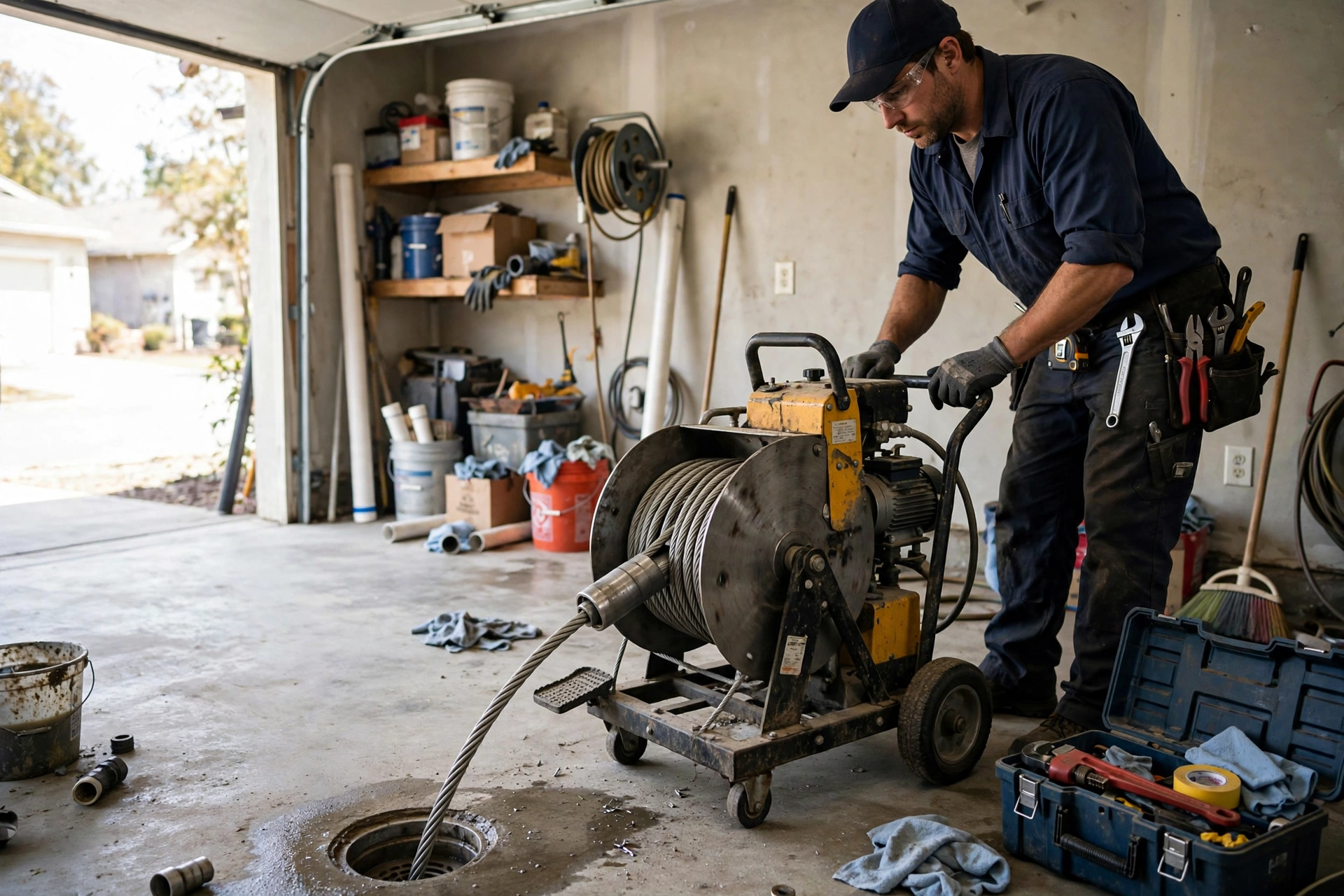
A drain machine feeds a flexible steel cable with a cutting head down the line. Different heads do different jobs: a spiral retriever pulls out obstructions, a blade cutter shears through root masses, a grease cutter scrapes soft buildup. The cable punches a path through the blockage and restores flow. It’s fast (usually under an hour), minimally invasive, and costs $150–$350 for a typical single-line cleaning in the San Gabriel Valley.
What snaking does well: clearing a discrete blockage — a wad of paper, a root ball at one joint, a localized clog. What it doesn’t do: clean the pipe. After snaking, the pipe walls still carry grease film, scale, and root stubble. Think of it as punching a hole through the problem rather than removing it. For a first-time clog in an otherwise healthy line, that’s often exactly enough.
Hydro Jetting: Pressure-Washing the Inside of Your Pipe
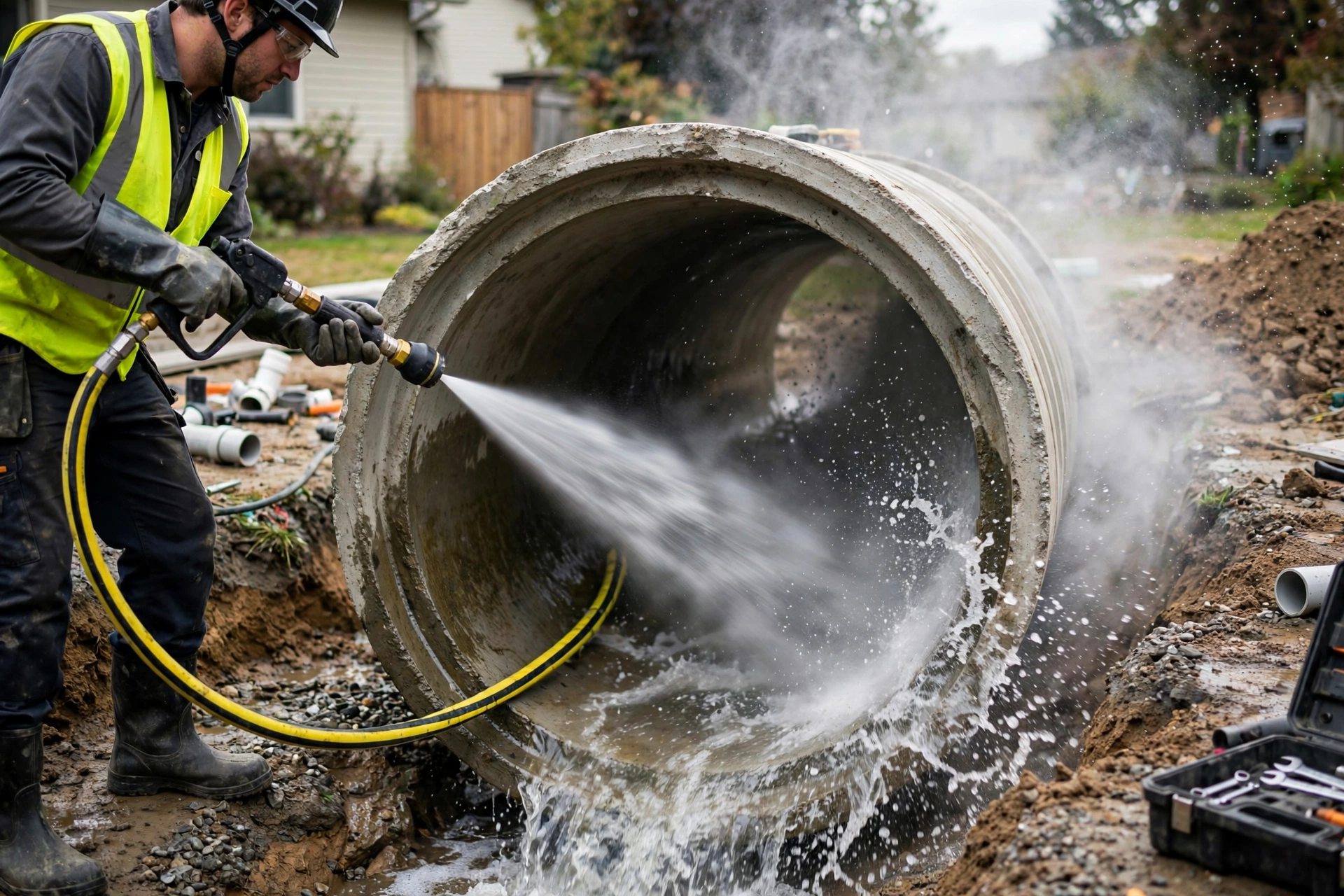
Hydro jetting sends water through a specialized nozzle at 3,000–4,000 PSI, scouring the full interior circumference of the pipe as the hose advances and retracts. It doesn’t just punch through the blockage — it strips grease, descales mineral buildup, pulverizes root masses, and flushes the debris downstream and out. The pipe comes out close to its original interior diameter. Cost: $400–$800 for a residential main line, taking 2–4 hours including setup.
Jetting is the right tool when the problem is buildup rather than a single obstruction: chronic grease in kitchen lines, heavy scale in old cast iron, root systems that have colonized a clay lateral, or a line that needs to be camera-inspected afterward (jetting first gives the camera a clear view of the actual pipe condition instead of a wall of sludge).
The caveat: jetting is powerful enough to damage compromised pipe. A responsible operator cameras the line first (or during) when the pipe’s condition is unknown — blasting 4,000 PSI into a collapsed Orangeburg lateral makes things worse. Any jetting quote on an old line should include or assume a camera inspection.
Head-to-Head: Which for Your Situation?
| Situation | Best Choice | Why |
|---|---|---|
| First-time clog, one fixture | Snaking ($150–$350) | Discrete blockage; full cleaning is overkill |
| Kitchen line slow from grease | Hydro jetting ($400–$800) | Grease coats pipe walls; snake just pokes through it |
| Roots in clay lateral, first occurrence | Snaking with root cutter | Cheapest effective relief; assess recurrence before investing more |
| Roots keep coming back (2+ cleanings/year) | Jet + camera, then repair decision | Recurrence means pipe damage — see the tree roots guide |
| Heavy scale in cast iron | Hydro jetting (with descaling head) | Only jetting removes adhered scale |
| Pre-camera-inspection cleaning | Hydro jetting | Clear walls let the camera show true pipe condition |
| Suspected collapsed or broken pipe | Camera first, then decide | Neither method fixes structural failure |
The Honest Upsell Problem
Here’s the industry reality: jetting carries higher margins, so some companies recommend it for every clog. And snaking carries repeat-visit revenue, so others will snake the same root-packed line annually forever without mentioning that the pipe itself is failing. The honest sequence is: snake the first occurrence, jet when buildup is the problem, and camera the line when problems recur — then fix the pipe if the camera shows damage. If a company pushes jetting without asking about the pipe’s age or offering a camera, or snakes your line for the third time without suggesting an inspection, you’re talking to a revenue plan, not a plumber.
What to Do Monday Morning: Your Action Steps
- Match the service to the history. First clog ever? Snake it. Same line clogging twice in a year? Jet it and camera it. Third time? The pipe needs repair, not another cleaning — read the sewer failure signs.
- Ask for the camera on recurring issues. A $250–$400 inspection after jetting shows whether you’re dealing with buildup (solved) or broken pipe (not solved).
- Get the price structure upfront. Snaking should be a flat rate for the line; jetting should specify main line vs. branch lines and whether camera time is included.
- Ask what the debris tells them. A good tech reads what comes back — grease, scale, roots — and tells you what it means for next time. That’s free diagnosis; take it.
The right cleaning method is the cheapest one that actually solves your problem — no more, no less. Plumbers in Altadena connects San Gabriel Valley homeowners with licensed C-36 contractors for drain cleaning and hydro jetting across Pasadena, Monrovia, Temple City, and the foothills. Call (888) 555-0199.
How much does hydro jetting cost?
Residential main-line hydro jetting runs $400–$800 in the San Gabriel Valley, typically taking 2–4 hours. Branch lines or add-on camera inspection may adjust the price.
Is hydro jetting safe for old pipes?
For sound pipes, yes — including old clay and cast iron with intact walls. For compromised pipe (collapsed sections, severely corroded Orangeburg), high-pressure water can worsen damage. A camera inspection first is the responsible sequence on old or unknown lines.
How long does drain cleaning last?
It depends on the cause. A snaked one-time clog may never return; snaked roots typically regrow in 6–18 months; jetted grease lines can stay clear for years if habits change. Recurring problems on a schedule point to pipe damage, not cleaning failure.
Can I hydro jet my own drains?
Not effectively or safely. Consumer pressure washers lack the specialized nozzles, hose control, and — critically — the camera verification that make jetting work. DIY jetting risks pushing blockages deeper or damaging pipe. This is a pro service.
Does drain cleaning include a camera inspection?
Usually not by default — snaking runs $150–$350 and camera inspection $250–$400 as separate line items. Many companies bundle jetting + camera at a package price. Always ask what’s included before authorizing.
Need a Plumber Right Now?
Don’t wait for a small leak to become a big bill. Our licensed local plumbers answer 24/7 — nights, weekends, and holidays.
(888) 555-0199
Average emergency response under 60 minutes across the San Gabriel Valley