Adding an ADU in LA County? Don’t Forget the Plumbing
Accessory dwelling units are booming across LA County — garage conversions, backyard cottages, and attached additions. Everyone budgets for framing, electrical, and finishes. But plumbing is where ADU projects most often blow their budget and timeline: sewer capacity, water service sizing, trenching across the yard, and a second round of permits and inspections. Here’s what the plumbing side of an ADU actually involves so you can plan it like a pro.
ADUs need proper pipe sizing — our repipe team handles capacity upgrades. Gas appliances in the ADU? See gas line services.
The Sewer Question Comes First
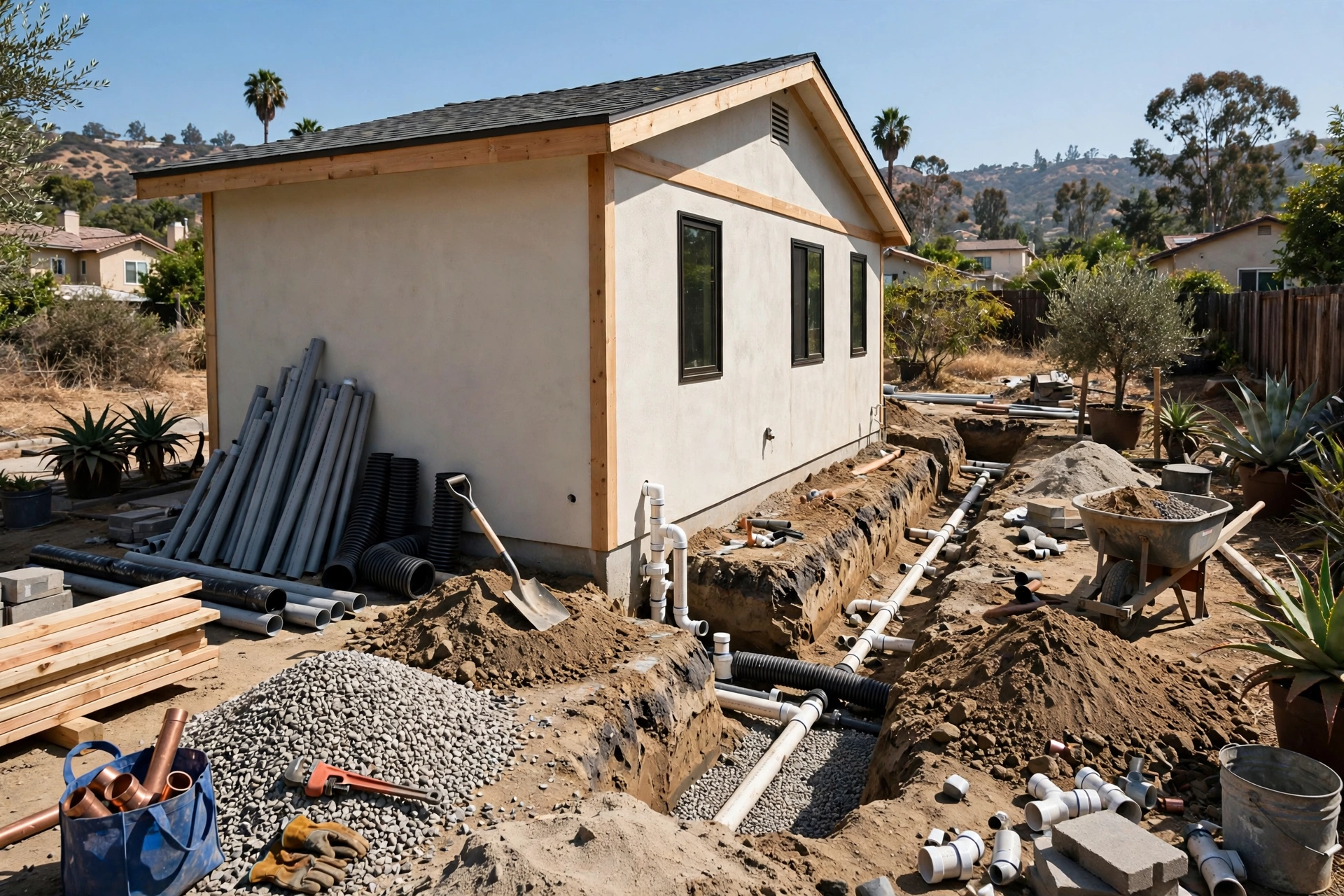
Every ADU adds fixtures — toilet, shower, kitchen sink, laundry — to your property’s drain load. The first engineering question is whether your existing sewer lateral can handle it. An older 3- or 4-inch clay lateral that’s already marginal doesn’t get better with more load. Your plumber or civil engineer needs to verify:
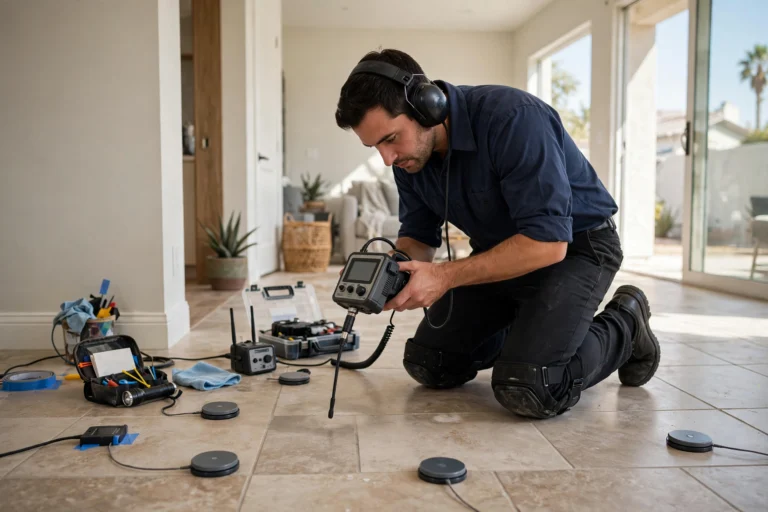
- Lateral size and condition — a camera inspection of the existing lateral is cheap insurance before design. Discovering a root-packed clay line mid-project is a five-figure surprise.
- Fixture-unit capacity — the total drainage fixture units of house + ADU must work with the lateral’s size and slope. Undersized laterals need upsizing.
- Connection point — where the ADU’s building sewer ties into the existing lateral or the city main, and whether that tie-in needs excavation under the yard, driveway, or sidewalk (encroachment permit territory).
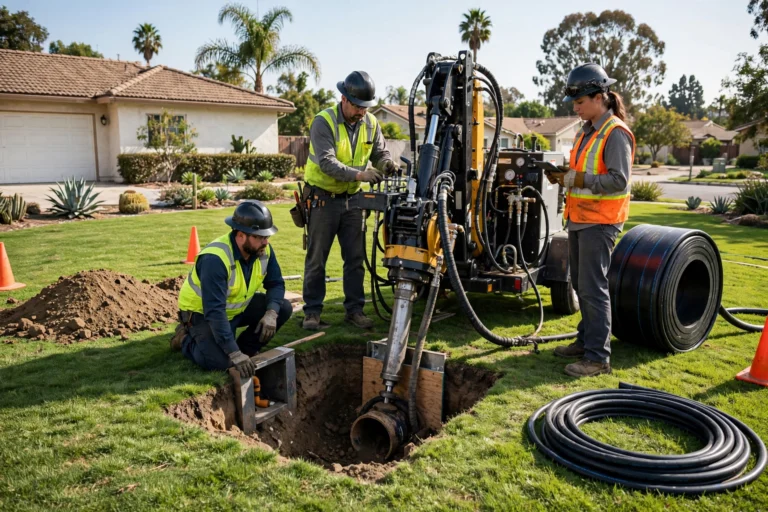
If the lateral needs replacement or upsizing to serve the ADU, do it during ADU construction when trenching equipment is already on site — mobilization is a real cost, and doing it later means tearing up the finished project. Our trenchless vs. traditional guide covers the replacement options.
Water Service: Size It Once
ADUs add simultaneous demand — someone showering in the ADU while the main house runs laundry. Many older foothill homes still have 3/4-inch water services that were adequate for the original house alone. The plumbing design must calculate peak demand for both units; if the service is undersized, you’ll get pressure complaints in both dwellings.
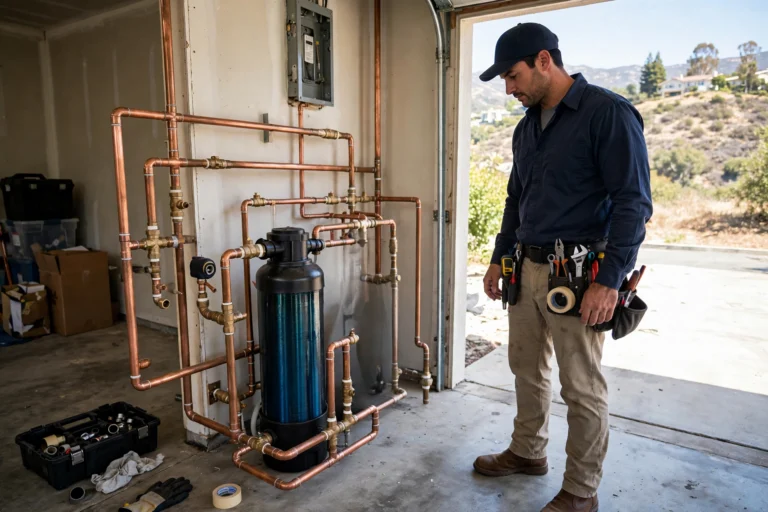
Upsizing the water service means a new tap at the street, trenching a new service line, and a larger meter — coordinate with your water agency early, because meter upgrades have their own lead times and fees ($1,000–$3,000+ depending on the agency and meter size). Inside, the ADU needs its own shutoff valves and ideally its own PRV branch so pressure issues in one unit don’t affect the other. Separate submetering for water is also worth considering if you’ll rent the ADU — it ends every utility argument before it starts.
Gas, Water Heater, and Fixture Planning
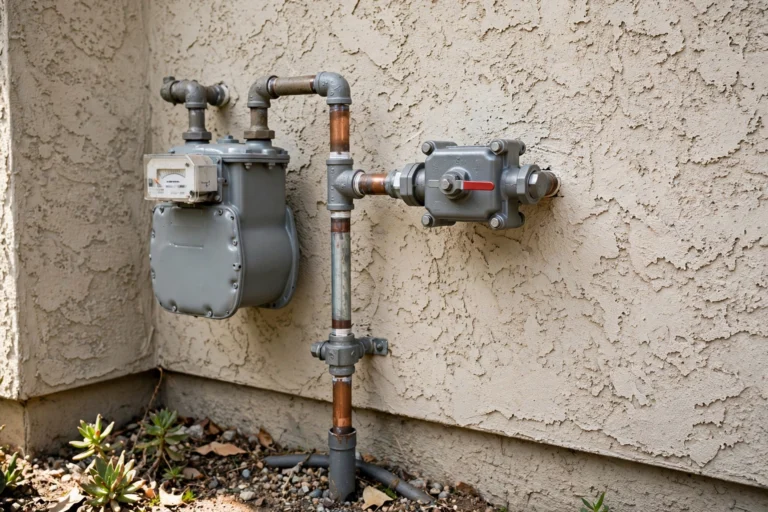
- Gas service: If the ADU has gas appliances (range, dryer, tankless heater), the existing gas service and meter must be sized for the added BTU load. SoCalGas evaluates meter capacity — an undersized meter starves appliances at peak demand. Many ADU builders go all-electric for the ADU to sidestep this entirely.
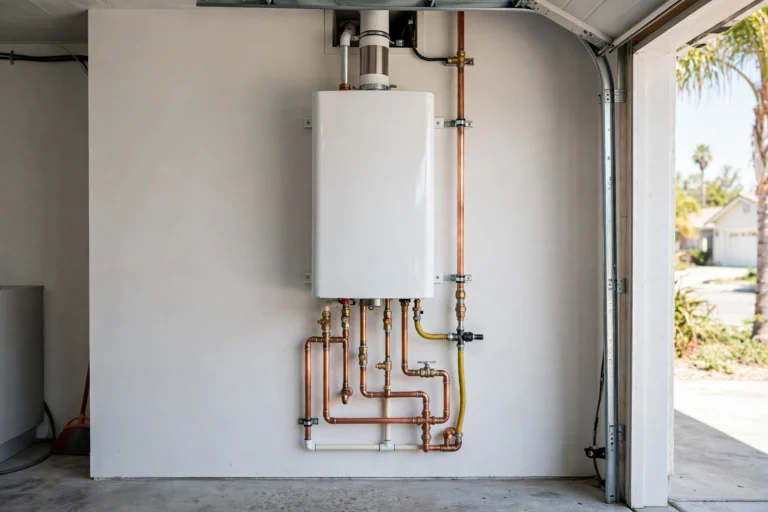
- Water heating: A separate small tank or tankless unit in the ADU is the clean solution — it avoids robbing the main house’s hot water and simplifies any future submetering. For the cost math, see tankless vs. tank in 2026.
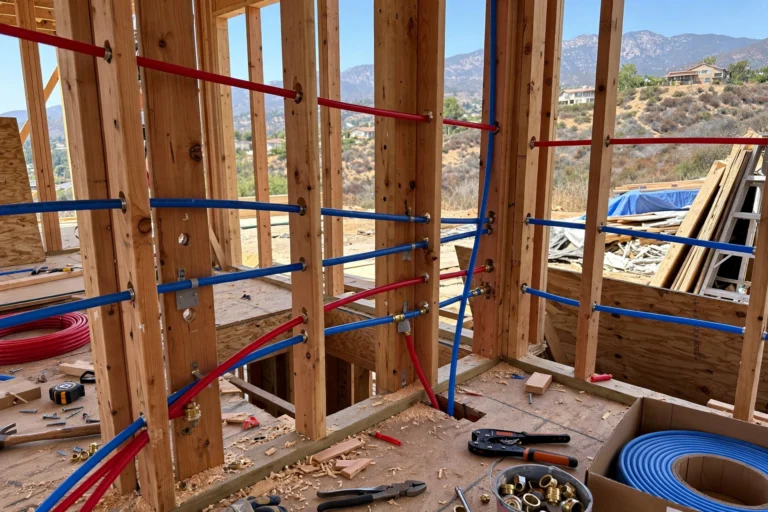
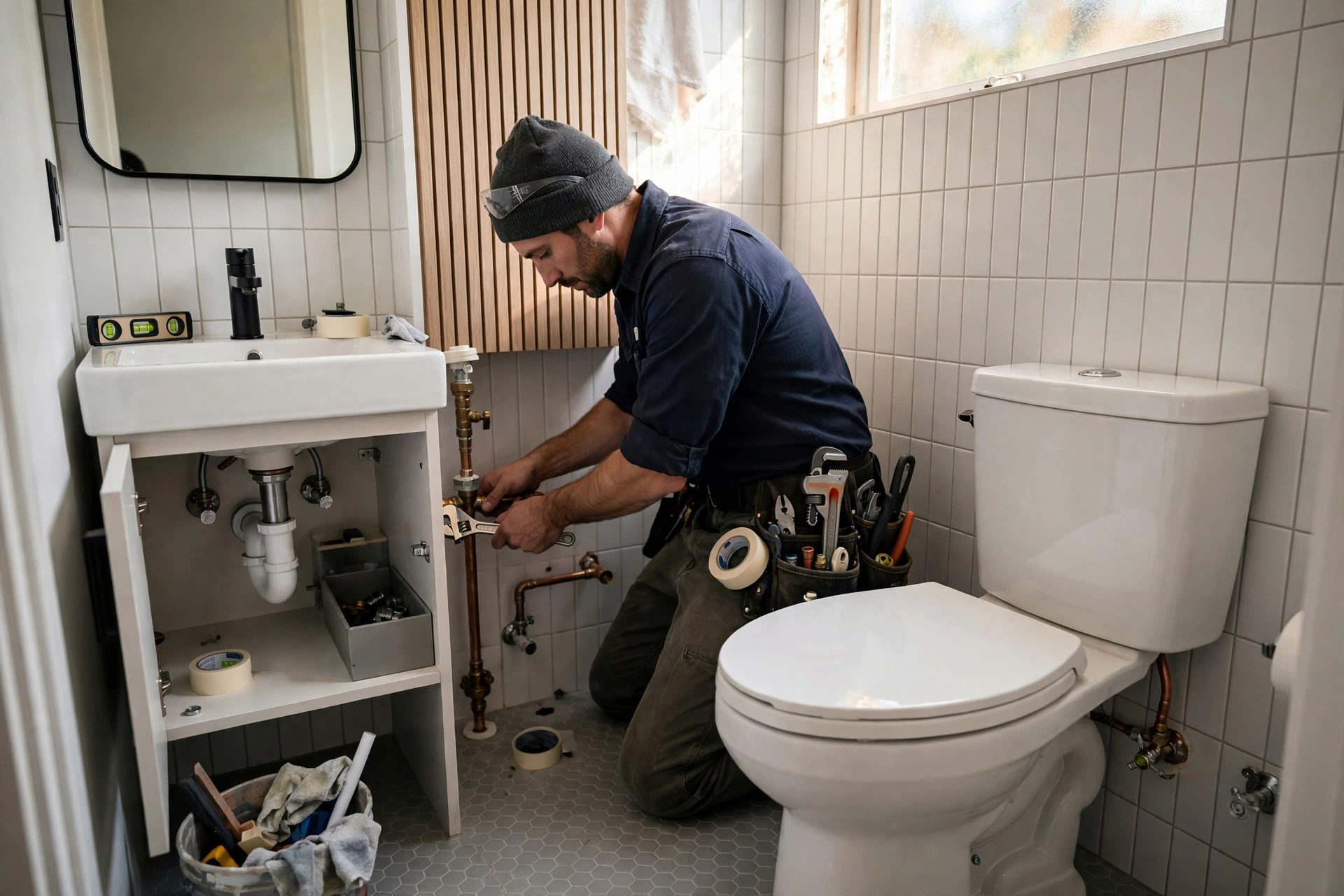
- Fixture rough-in timing: ADU plumbing rough-in follows the same sequence as any new construction — underground, rough, inspection, trim — and the inspections are separate from the main house. Schedule them into the project timeline, not around it.
- Backwater protection: If the ADU’s fixtures sit below the nearest upstream manhole rim elevation, code requires a backwater valve to prevent city-main surcharges from backing into the unit. On flat valley lots this is commonly triggered — verify elevations early.
Permits, Fees, and Inspections
ADU plumbing requires its own plumbing permit (usually within the ADU building permit package) with plan review, plus the standard inspection sequence: underground, rough, and final. In LA County, plumbing permit fees for an ADU typically run $500–$1,500 depending on scope. Separately, watch for:
- Sewer connection/capacity fees — some agencies charge for added fixture units; others have waived ADU impact fees under state law. Verify with your specific city or the county — this varies and changes.
- Water meter upgrade fees — as noted above, $1,000–$3,000+.
- Encroachment permits — for any trenching in the public right-of-way (sidewalk, parkway, street).
California’s ADU laws have stripped away many impact fees, but plumbing-adjacent fees (meters, capacity) often survive. Get the fee schedule in writing from each agency before finalizing the budget.
What to Do Monday Morning: Your Action Steps
- Camera your existing sewer lateral now. $250–$400 today prevents a mid-project lateral replacement crisis. This is the highest-ROI pre-ADU plumbing step.
- Get a fixture-unit and demand calculation from a plumber or designer before plans are finalized — it determines lateral sizing, water service sizing, and meter needs.
- Call your water agency about meter upgrades early. Lead times and fees vary; this is a common schedule-killer discovered too late.
- Decide gas vs. all-electric for the ADU before rough-in design — it changes the gas sizing, venting, and water heater plan completely.
- Budget plumbing at 15–25% of ADU construction cost as a planning figure, and keep a 10% contingency. Underground surprises are the rule, not the exception, on older lots.
An ADU’s plumbing is the invisible half of the project — get the underground decisions right and the visible half goes smoothly. Plumbers in Altadena connects San Gabriel Valley homeowners with licensed C-36 contractors experienced in ADU and new-construction plumbing, from lateral evaluation to final inspection. Planning an ADU in Pasadena, Altadena, or anywhere in the foothills? Call (888) 555-0199 to talk through the plumbing scope.
Can my existing sewer line handle an ADU?
Maybe — it depends on the lateral’s size, slope, and condition. A camera inspection plus a fixture-unit calculation for house + ADU gives the definitive answer. Older 3-inch or root-damaged clay laterals often need upsizing or replacement to serve the added load.
Do I need a bigger water meter for an ADU?
Often yes. The combined peak demand of two dwellings frequently exceeds what an older 3/4-inch service and meter deliver. Your water agency evaluates this during plan review; meter upgrades run $1,000–$3,000+ with their own lead times.
How much does ADU plumbing cost?
As a planning figure, budget 15–25% of total ADU construction cost for plumbing, including trenching, sewer/water tie-ins, rough-in, fixtures, and permits — more if the lateral or water service needs upsizing. Underground work on older lots is the biggest variable.
Does an ADU need its own water heater?
It’s strongly recommended. A dedicated unit avoids hot-water conflicts between dwellings and simplifies any future submetering or rental arrangement. A small tank or point-of-use tankless usually suffices for a 1–2 bedroom ADU.
What permits does ADU plumbing need in LA County?
A plumbing permit within the ADU building permit package (plan review + underground/rough/final inspections), possible encroachment permits for right-of-way trenching, and water agency approvals for meter changes. Plumbing permit fees typically run $500–$1,500.
Need a Plumber Right Now?
Don’t wait for a small leak to become a big bill. Our licensed local plumbers answer 24/7 — nights, weekends, and holidays.
(888) 555-0199
Average emergency response under 60 minutes across the San Gabriel Valley